


Last updated: August 19, 2026
Muang Kaew Golf Course is an 18-hole, par-72 course in the Bang Phli district of Samut Prakan. It opened in 1993 to a design attributed to Seni Thirawat and was renovated in 2003 by Schmidt-Curley Design (Lee Schmidt and Brian Curley), so the 18 holes played today are the renovated course. It measures about 7,015 yards from the back tees, 6,521 from the club tees and 5,473 from the front.
The greatest practical value of this course is its location. As the address says — Bangna-Trad Highway KM 7.7 — it sits just 7.7 kilometres along Bangna-Trad Road. Among the courses lining that road in Samut Prakan, it is one of the closest to the city centre.
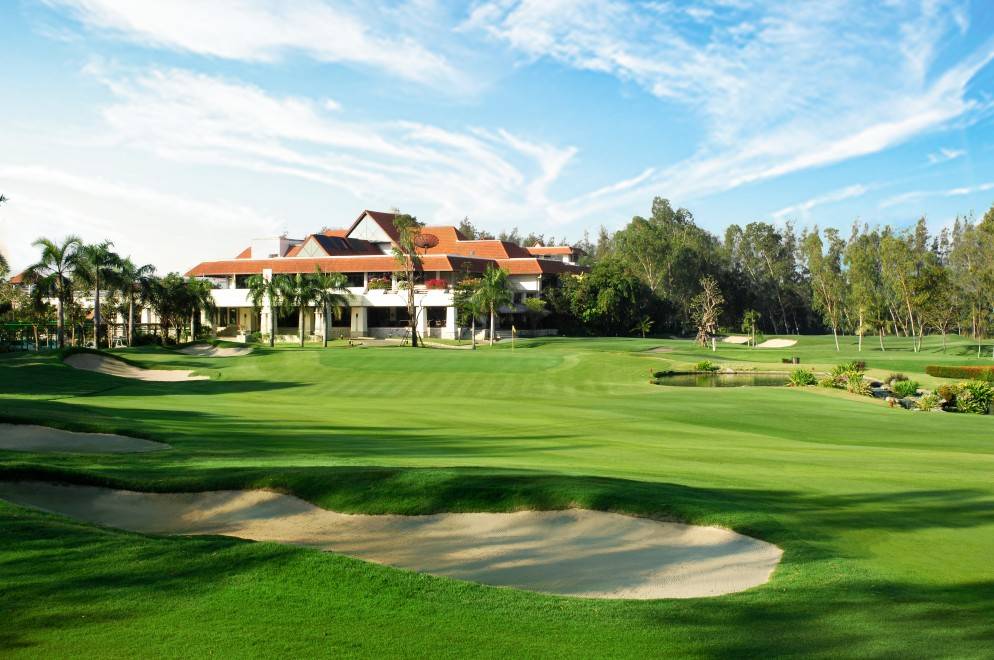
The layout is characterised by eucalyptus avenues and raised greens heavily guarded by bunkers. The fairways are generously wide, but the greens sit high and are ringed with sand. It is a design that asks more of the shot into the green than of the tee shot.
Water is concentrated on the front nine: small ponds, ditches and even a canal come into play. The back nine is comparatively flat, so defending on the front and making your score on the back is the effective approach. Check today’s tee times and rates on the GoGolf app or website.
Rates and booking
Green fees vary by day of the week, public holidays, season and timing. The rates shown on GoGolf reflect these in real time as closely as possible, so please check the GoGolf app or website for current pricing.
Price summary
Green fee + cart, per playerTHB3.400to4.200
| AM from | PM from | |
|---|---|---|
| Weekday | THB 3.400 | THB 3.400 |
| Weekend & holiday | THB 4.200 | THB 4.200 |
Price calendar
25 Oct – 21 Nov 2026 · THBWeekend & holiday rateNo tee timesM = million THB, lowest of each half-day
Book more easily with the GoGolf app


Course information
| Location | Bangna-Trad Highway KM 7.7, Bang Kaew, Bang Phli, Samut Prakan 10540 |
|---|---|
| Designer | Seni Thirawat (1993, attributed) / renovated in 2003 by Schmidt-Curley Design (Lee Schmidt & Brian Curley); the present 18 holes are the renovated course |
| Opened | 1993 |
| Holes | 18 holes, par 72 |
| Length | Back about 7,015 yards / Club about 6,521 yards / Front about 5,473 yards |
| Course rating (SSS) | Back 73.9 / Club 71.5 / Front 72.6 |
| Course type | Open parkland fringed with trees; gentle movement and easy walking |
| Defining features | Generously wide fairways lined with eucalyptus. Raised greens heavily guarded by bunkers |
| Water | Concentrated on the front nine (small ponds, ditches and a canal). The back nine is comparatively flat |
| Signature hole | The par-5 13th, with a blind tee shot |
| Practice | Practice facilities available |
| Caddies and carts | A caddie is compulsory. Carts available for hire |
| Spikes | Non-metal spikes only |
| Telephone | +66 2 740 2699 |
| Official site | muangkaewgolf.com |
| Rates | Vary by day, season and tee time. Check current rates on the GoGolf app or website |
What kilometre 7.7 of Bangna-Trad means
The first reason to choose Muang Kaew is how close it is to the city centre.
The courses of Samut Prakan are dotted along Bangna-Trad Road. Lakewood is at kilometre 18, Subhapruek at kilometre 26. Muang Kaew sits at kilometre 7.7, putting it among the closest to the centre.
What a shorter journey actually buys
When you play golf in Bangkok, the biggest cost is really the travel. If eighteen holes take five hours and the round trip takes two, the day costs you seven.
A course nearer the centre cuts that round trip. A morning that happens to be free, half a day between meetings on a business trip — when you want to fit a round into limited time, Muang Kaew’s location is a practical weapon.
Close to Suvarnabhumi too
Bangna-Trad Road is also the axis running towards Suvarnabhumi International Airport. Fitting a round into an arrival or departure day is entirely realistic.
What the 2003 renovation means
Muang Kaew opened in 1993. The original design is attributed to Seni Thirawat, although very little firm documentation about him survives. In 2003 the course was renovated by Schmidt-Curley Design, and the 18 holes played today are that renovated course.
Schmidt-Curley is the practice of Lee Schmidt and Brian Curley, which has built a great many courses across Asia. When they work on an existing course, the focus is usually on reshaping the greens and the bunkering.
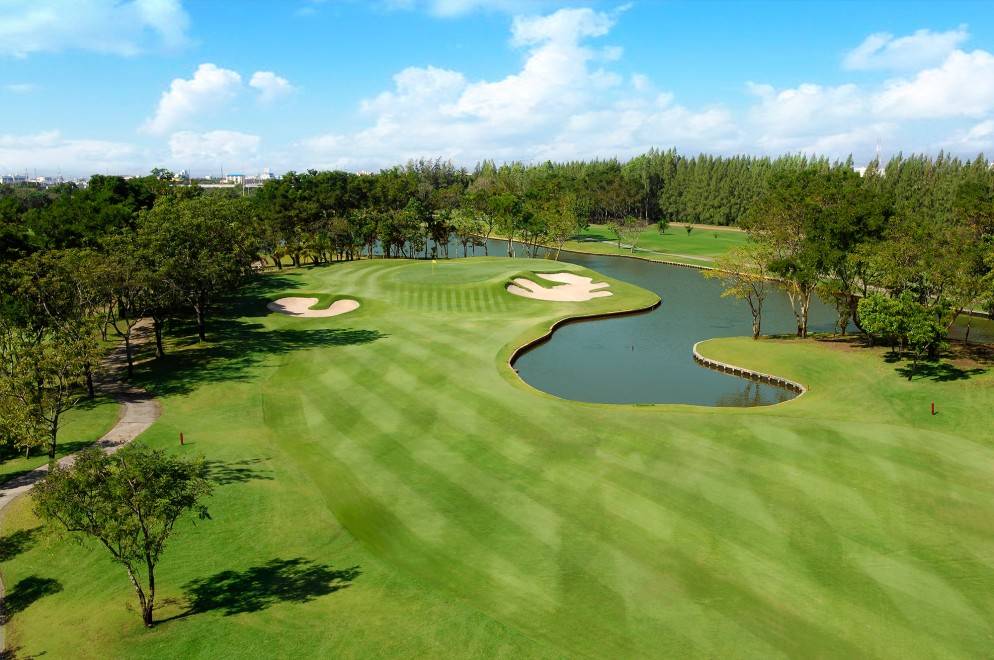
The present character of Muang Kaew — raised greens heavily guarded by bunkers — shows that emphasis clearly. Keep the fairways wide and create the difficulty at the green. Anyone can hit the tee shot; nobody finds the green easily.
More than thirty years after it opened, the eucalyptus and other trees have matured. The bones of the design and the accumulation of time together make the settled landscape you see now.
Two nines that could not be more different
The eighteen holes at Muang Kaew divide sharply between the two nines.
The front nine: governed by water
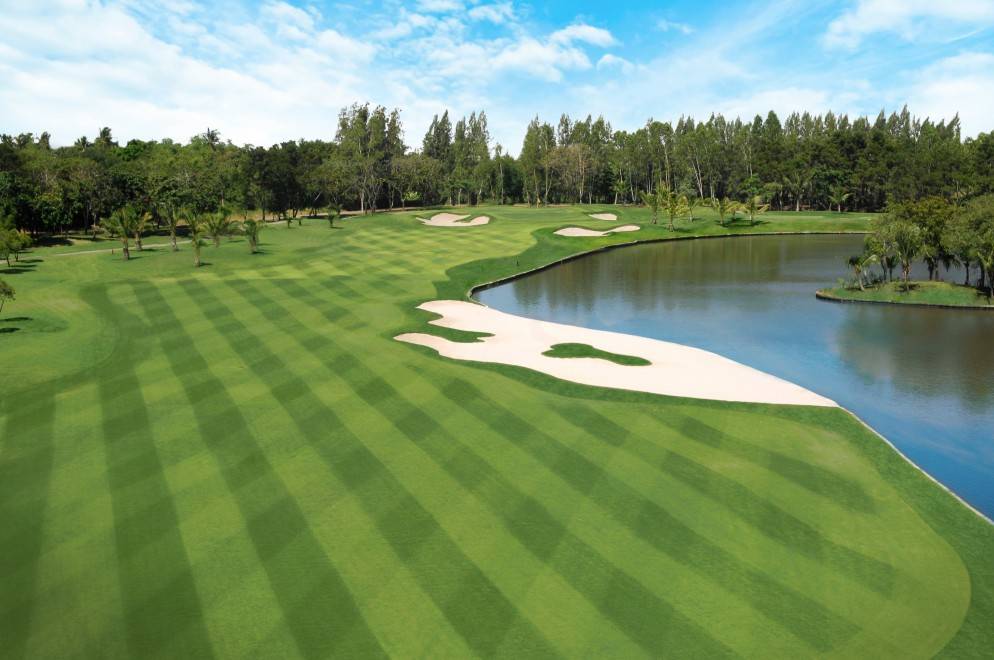
Water is concentrated on the front nine, and it takes several forms: small ponds, ditches, and even a canal come into play.
Ditches and canals are difficult in a different way from ponds. They are narrow and long, crossing or running alongside the fairway. You have to judge not only whether to carry them but how to stay away from them.
In other words, the front nine is not where you make a score. It is where you defend one. Get through it without a collapse and the back nine will give you something back.
The back nine: comparatively flat
On the back nine the weight of water falls away and the ground is comparatively flat. If you have arrived here without wearing yourself out, this is where you make your score.
The hole to see is the par-5 13th. The tee shot is blind and you cannot see where to land it. On a first visit, ask your caddie for the line and a marker before you swing.
How to attack a raised green
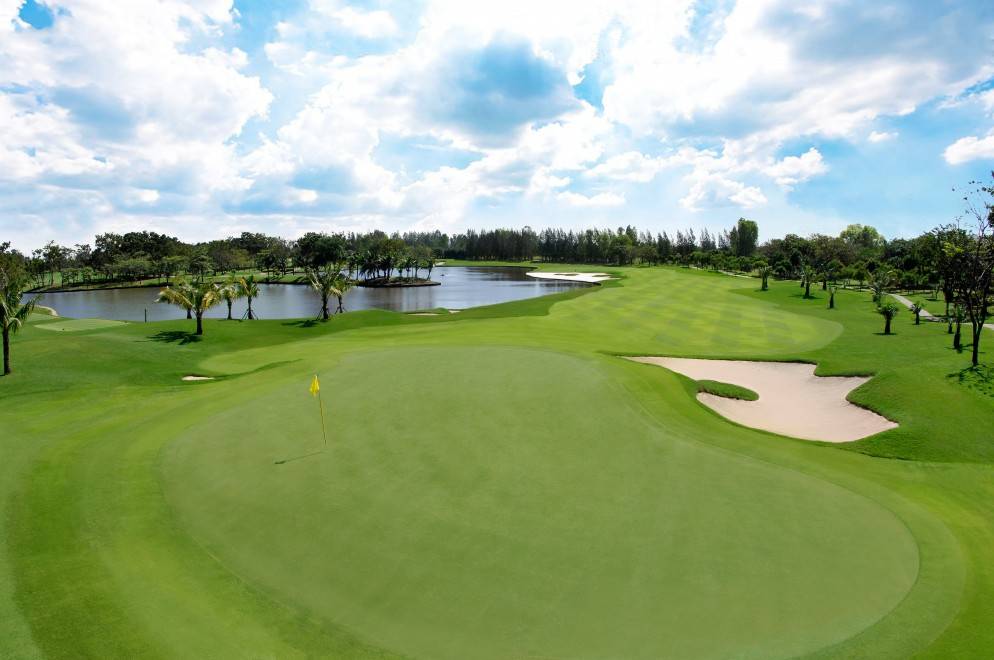
What decides your score at Muang Kaew is the shot into the green. The greens sit high and are heavily ringed with bunkers.
Come up short and the ball rolls back
The danger of a raised green is that being fractionally short sends the ball back down the slope in front. A shot you thought had finished on the surface returns, leaving you to play again from a bunker or from below the green.
The remedy is simple: take one more club. There is a risk of going long, but it is easier to calculate than landing on the front slope.
If you miss the green, get it on first
Playing from around a raised green means hitting into an upslope. Try to get it close with a low shot and it will lose speed on the slope and come up short.
In that situation, prioritise finding the putting surface over getting close to the flag. Simply switching to a two-putt mindset avoids the three- and four-shot losses.
How to think about scoring
- Defend on the front nine. With ditches and a canal in play, laying up is the priority.
- Water is not only about carrying it, but about staying away. A long, narrow ditch catches you when you miss sideways too.
- Take one more club into the greens. They are raised, so coming up short sends the ball back down the slope.
- If you miss the green, get it on first. Playing into an upslope, reaching the surface is the first priority.
- Ask your caddie for the line at the 13th. On a blind tee shot, information is everything.
- Make your score on the back nine. It is comparatively flat, on condition that you have not exhausted yourself on the front.
The course rating from the back tees is 73.9. Nearly two shots above a par of 72, that number says the back tees are genuinely demanding. The club tees, at about 6,521 yards (rating 71.5), are set comparatively close to the back. Choose according to your own distance.
Common mistakes, and how to avoid them
1. Attacking too much on the front nine
Force distance on a front nine where water is concentrated and the ditches and canal will catch you. Go into it thinking a par is fine and a bogey is acceptable, and you keep something in reserve for the back.
2. Coming up short of a raised green
This is the most common mistake. A ball that lands on the front slope rolls back and leaves an awkward recovery. When in doubt, take more club. Keeping to that principle for eighteen holes changes your score.
3. Taking the blind shot at the 13th lightly
When hitting to somewhere you cannot see, most people swing with an unconscious anxiety, and produce a shot unlike their usual one. Fix the line and the marker before you swing. Simply having the information steadies the swing.
4. Getting complacent because it is close to town
A short journey makes it tempting to skip the preparation. But the course itself has the substance of a 73.9 rating. Hit a few balls on the range before you start. Those ten minutes protect your score over the opening holes.
Facilities and service
Practice
There are practice facilities for loosening up before the round. With this many raised greens, it is well worth getting your distance control settled before you start.
Caddies and carts
A caddie is compulsory. They can tell you about the blind holes and where the ditches run — things that are hard to judge on a first visit. Carts are available for hire.
The spike rule
Non-metal spikes only. Check the soles of the shoes you plan to bring.
What to bring
- Spare balls — ditches and a canal are in play on the front nine, so bring more than you think.
- Sunscreen and a hat — essential.
- Non-metal spiked shoes — metal spikes are not permitted.
The best season and time of day
The dry season from about November to February is the most comfortable: humidity drops, and mornings and evenings can feel genuinely cool.
In the hot season from March to May the daytime temperature climbs, so an early start keeps the toll down. Being close to town, this course also has the advantage that early slots are easier to take.
The rainy season from June to October is mostly a short afternoon squall passing through. A morning round is less affected, and tee times are comparatively easy to get. After rain the ditches can run higher, though, so be more careful with your decisions on the front nine.
Who this course suits
- Anyone short of time: at kilometre 7.7 of Bangna-Trad Road, the round trip is kept down.
- Business travellers: it sits on the axis towards Suvarnabhumi International Airport, so it fits an arrival or departure day.
- Anyone testing their iron play: raised greens and bunkering ask about the quality of the shot into the green.
- Better players: a course rating of 73.9 from the back tees gives you something to get your teeth into.
- Improving players: the front tees are about 5,473 yards, and the wide fairways take the stress out of the tee shot.
- Anyone who plays regularly: being close, it works well as a course you visit often.
On the other hand, anyone looking for dramatic scenery or a resort feel may find its practical, near-city character plain. The value here lies in the access and in the clear difficulty around the greens.
How it differs from other courses in Samut Prakan
The courses along Bangna-Trad Road have distinctly different characters. It helps to place Muang Kaew among them by the kilometre marker.
What is distinctive here is how close it is to the centre. Even on the same road, kilometre 7.7 and kilometre 26 mean entirely different journey times. If you are choosing on the basis of buying time, it is a strong candidate.
Combining it with other courses in Samut Prakan
If you are playing several rounds during your stay, pairing this with neighbouring courses keeps the travel down.
- Green Valley Country Club — on the same Bangna-Trad Road, with striking sleeper-faced bunkers.
- Lakewood Country Club — 27 holes, recombined for a different round each time.
- Summit Windmill Golf Club — a Nick Faldo design, with night golf until 10pm.
- Thana City Country Club — a Greg Norman design, with a set of long par 3s.
Availability and rates for the whole area are on the Samut Prakan golf booking page.
In summary
The case for Muang Kaew comes down to three things.
- The location — kilometre 7.7 of Bangna-Trad Road. Among the closest of the Samut Prakan courses to the centre, keeping the travel down.
- The greens — raised and heavily guarded by bunkers. The 2003 Schmidt-Curley renovation tells here.
- The contrast between the nines — water concentrated on the front, comparatively flat on the back. Defend, then make your score.
Muang Kaew Golf Course opened in 1993: 18 holes, par 72. About 7,015 yards from the back tees, with a course rating of 73.9. The wide eucalyptus-lined fairways and the blind tee shot at the 13th stay with you.
If what you want is a proper course you can play in limited time, this is a realistic and satisfying choice. Check today’s tee times and rates on the GoGolf app or website.
Frequently asked questions
Where is Muang Kaew Golf Course?
How many holes is it, and what is the par?
Who designed the course?
What defines the course?
Is there a difference between the two nines?
Which is the signature hole?
How should I attack the raised greens?
Can a beginner play here?
How far is it from the city centre?
Is there a driving range?
What about caddies and carts?
What is the best season and time of day?
How much does it cost?
Is there a transfer service?
More Golf Courses in Samut Prakan
Swipe to see more courses →