


Last updated: August 19, 2026
Bangpoo Golf and Sport is an 18-hole, par-72 course in the Phraeksa area of Samut Prakan. It was designed by Arnold Palmer and opened in 1991, measuring roughly 7,048 yards from the back tees, 6,020 from the club tees and 5,331 from the front tees. It sits about 35 kilometres south-east of central Bangkok, in an area facing the Gulf of Thailand.
What defines the character of this course is how close the sea is. Being near the gulf, sea breeze and wind blow across it constantly through the round. On a day when an inland course would be still and quiet, here you have to build the wind into your club selection.
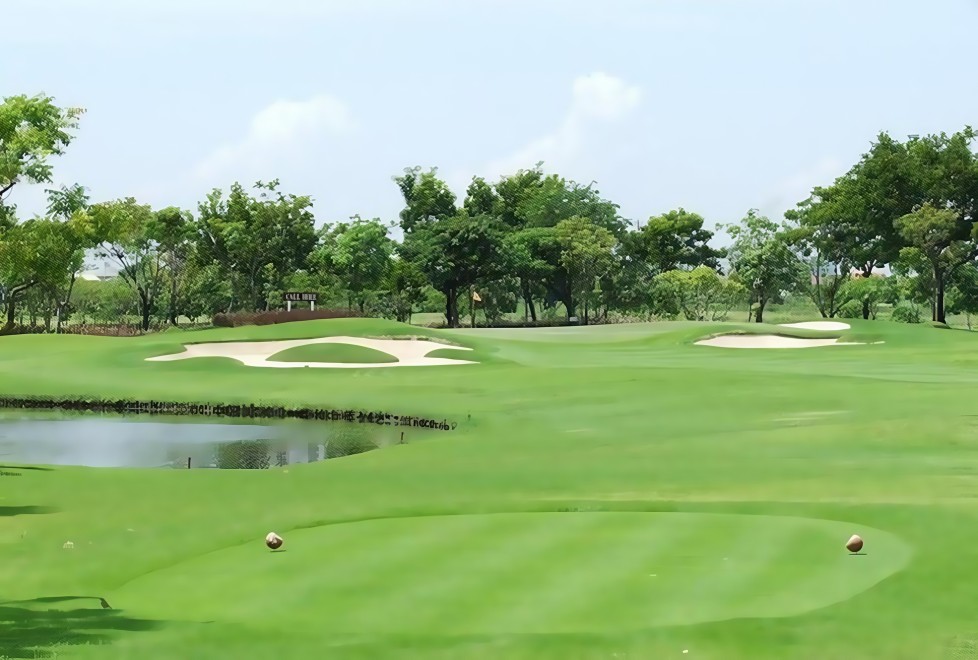
The layout itself is generous: wide fairways and large greens. The land undulates naturally and is easy to walk. But water is in play on around half the holes, and how easy it looks does not necessarily match how easily it scores.
The other distinguishing feature is the name itself — Golf and Sport. The clubhouse has sport, wellness and dining facilities, so it is built for spending the time before and after the round there too. Check today’s tee times and green fees on the GoGolf app or website.
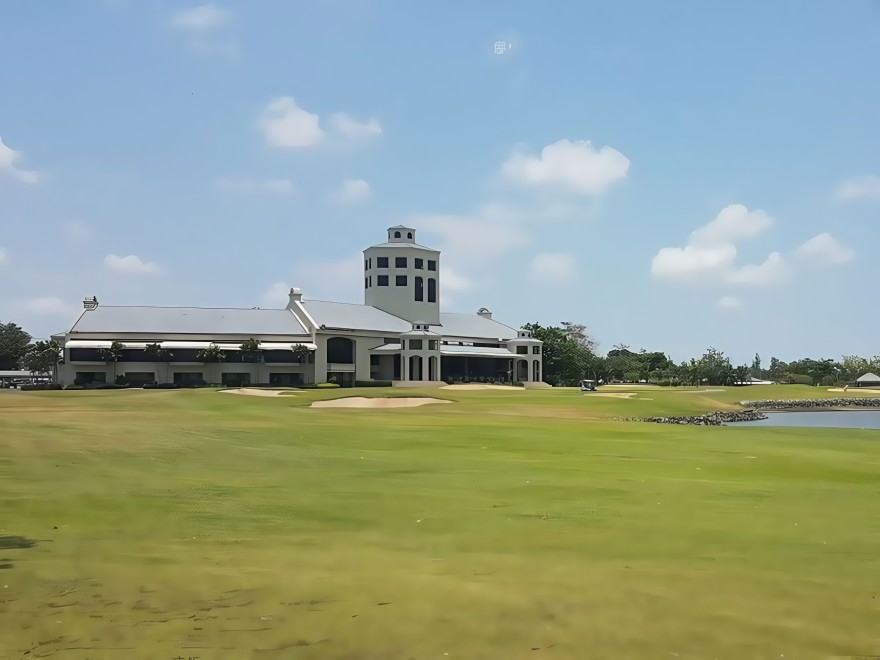
Green fees and booking
Green fees vary by day of the week, public holidays, season and timing. The rates shown on GoGolf reflect these in real time as closely as possible, so please check the GoGolf app or website for current pricing.
Price summary
Green fee + cart, per playerTHB2.100to3.450
| AM from | PM from | |
|---|---|---|
| Weekday | THB 2.100 | THB 2.100 |
| Weekend & holiday | THB 3.450 | THB 2.650 |
Price calendar
30 Aug – 23 Sep 2026 · THBWeekend & holiday rateNo tee timesM = million THB, lowest of each half-day
Book more easily with the GoGolf app


Course information
| Address | 191, Phraeksa Subdistrict, Mueang Samut Prakan District, Samut Prakan 10280 |
|---|---|
| Designer | Arnold Palmer |
| Opened | 1991 |
| Holes | 18 holes, par 72 |
| Length | Back tees approx. 7,048 yards / club tees approx. 6,020 yards / front tees approx. 5,331 yards |
| Course type | Parkland on naturally undulating ground, easy to walk |
| Setting | Close to the Gulf of Thailand and exposed to sea breeze. About 35 km south-east of central Bangkok |
| Water | Water affects play on around half the holes |
| Signature hole | The long par-4 17th, heavily involved with water |
| Clubhouse | Sport, wellness and dining facilities |
| Practice | Practice facilities available |
| Caddies | A caddie accompanies every player |
| Spikes | Non-metal spikes only |
| Phone | +66 2 095 2899 |
| Green fees | Vary by day, season and time slot. Check current rates on the GoGolf app or website |
What it means that Arnold Palmer designed it
The name Arnold Palmer is bound up with the history of golf itself — as a player with seven majors, and as the man who turned golf into a popular sport. He arrived with the coming of the television age and created a following around the world known as Arnie’s Army.
The courses he built as an architect share a consistent philosophy: do not trap the player. He does not block your view or hide hazards out of sight to raise the difficulty. The danger is shown to you, and whether to take it on is left to you.
That attitude is clear at Bangpoo. The fairways are wide and the greens are large. Stand on the tee and you can broadly see what is where. The first impression of a course you can swing freely on comes from that design philosophy.
That does not make it easy, though. Water is in play on around half the holes, and the wind off the sea throws your distances out. Seeing it clearly and still not being able to hit it that way — that is the essence of Bangpoo.
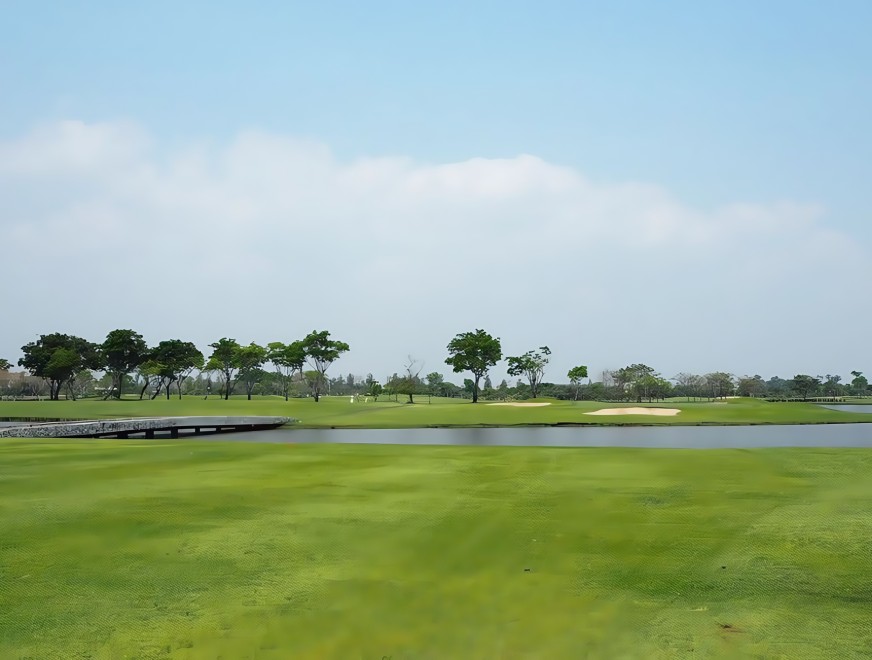
The sea breeze, the other architect
What decisively separates Bangpoo from other courses near Bangkok is its position close to the Gulf of Thailand.
At inland courses the wind is blocked by trees and buildings. But in this stretch facing the gulf, the wind off the sea passes straight across the course. And it is not constant: both its strength and its direction change with the time of day.
A different course in the morning and the afternoon
Generally, on coastal ground mornings are relatively calm and the wind builds as the day heats up. In other words, a morning start and an afternoon start give the same hole different difficulty. A distance a 7-iron reached in the morning may be beyond a 6-iron in the afternoon.
The wind favours a low ball
The principle on a windy course is to keep the ball down. A high ball gets moved and you cannot calculate where it lands. Take one more club and swing compactly. That small extra step protects your score on a windy day.
The wind bites around the greens too
It is easy to overlook, but the wind affects chips and putts as well. In a crosswind especially, even a short chip changes trajectory. Get into the habit of watching the flag move once you are on the green and your distance control improves.
The character of the course: space and water
Generous fairways
The fairways at Bangpoo have room in them. There is no run of brutally narrow holes, and there are few moments where the tee shot frays your nerves. That is a reassuring condition for improving players and for anyone playing a round after a long break.
Large greens
The greens are built large too. That is generous in the sense that it raises your chance of holding them, but large does not mean safe. Land on the wrong side of the pin and you are left with a very long putt. Deciding which area of the green you are aiming at before you swing is the shortest route to fewer putts.
Water on around half the holes
Water affects play on roughly half the holes. Because the fairways are wide it is easy to take the water lightly, but combine it with wind and the difficulty rises sharply.
A carry over water into the wind in particular is where this course costs you the most shots. The feeling that you normally get there is no use against the wind. Keep the option of laying up when you are in doubt.
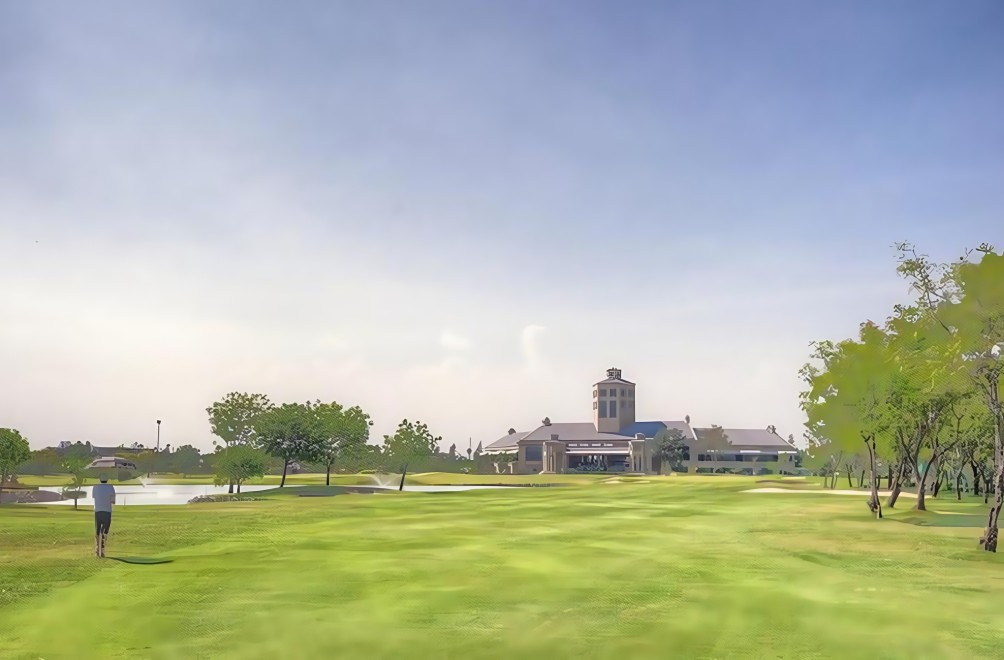
The signature hole: the long par-4 17th
The hole named as Bangpoo’s signature is the long par-4 17th.
It has real length for a par 4, and water is heavily involved. Its position as the 17th matters too: the better your round is going, the more tension there is in the tee shot here.
The way to play it is simple: do not think of it as a par 4. There is distance, there is water and there is wind. Choosing from the outset to reach the green in three and take your bogey protects your score more often than not.
Force it in two and find the water and it costs you more than one shot. The classic late-round collapse is concentrated here. Decide how you are playing the 17th as you finish the 16th, and the hesitation disappears when you stand on the tee.
Location and access
Bangpoo is in the Phraeksa area of Mueang Samut Prakan district, Samut Prakan. It is about 35 kilometres south-east of central Bangkok, in an area facing the Gulf of Thailand — a different direction within the same province from the courses along Bangna-Trad Road.
For transport, use a company car or your own vehicle, or a ride-hailing service such as Grab, which is widely used in Bangkok. The basic route runs south down Sukhumvit Road, and travel time varies considerably with traffic. Congestion is common on weekday mornings and evenings, so work backwards from your tee time and leave with margin.
As this is a course out on the suburban side, it is worth thinking about your ride home in advance. Please note that GoGolf does not operate or arrange transfers or shuttle services.
It is also relatively easy to reach in the direction of Suvarnabhumi International Airport, so slotting it into spare time on an arrival or departure day is worth considering.
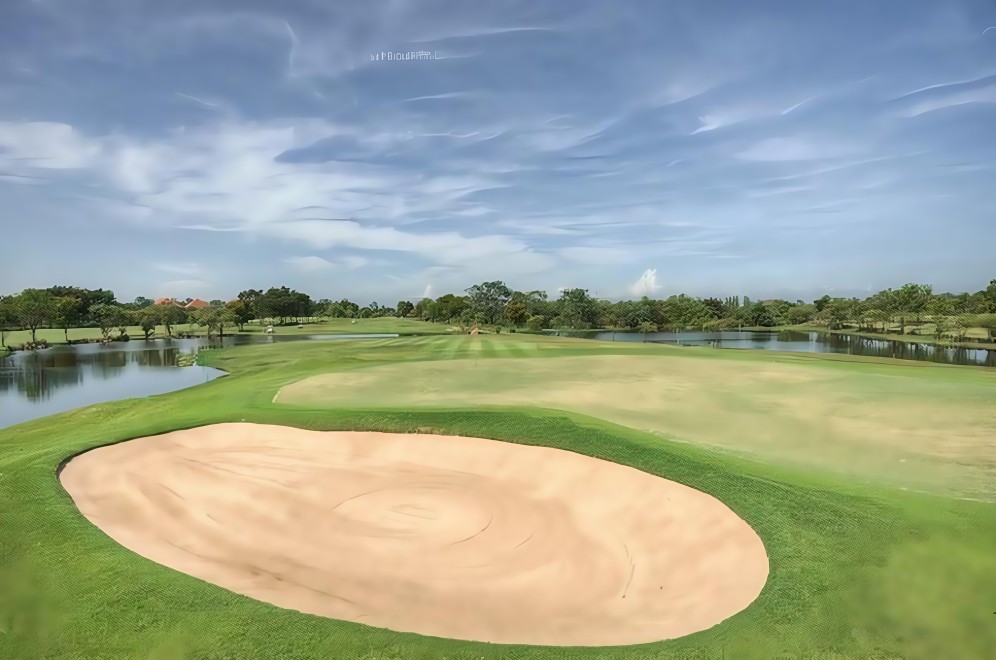
What the name Golf and Sport means
The club’s full name contains the word Sport. That is not decoration: the clubhouse genuinely has sport, wellness and dining facilities.
In other words, Bangpoo is not a place where you play golf and go home. Move, work up a sweat, eat — before or after the round. It was built as a facility where you can spend the day.
Well suited to group play
That makes it a good match for society days and group outings. You can move straight from the round to a meal without travelling anywhere, which lightens the load on everyone and makes the organiser’s job easier.
When some of your party do not play golf
When you visit with family or friends, not everyone will necessarily be playing. With sport and dining facilities available, people who are not playing can still spend the time in the same place.
How to structure the eighteen holes
Early on: take a reading of the day’s wind
Treating the first few holes as time to measure the strength and direction of the wind, rather than as time to build a score, makes the middle of the round easier. How much does the same club get moved? How much distance does it lose? Getting a feel for that early decides the accuracy of your club selection all round.
The fairways are wide, so a big mistake early is recoverable. Starting out with the intention of gathering data, rather than rushing, is the smart way in.
Mid-round: defend on the water holes
Water is in play on around half the holes — which means a decision roughly every second hole. Can you avoid forcing it here and prioritise reliable progress? Come through the middle without a big number and you keep some ease of mind for the finish.
Late on: work backwards from the 17th
The 17th, where distance, water and wind all come together, is where this course costs you the most shots. Decide how you are playing it as you finish the 16th. Plan on a bogey and the hesitation disappears when you stand on the tee.
Then the 18th, at the hour when fatigue and wind dull your judgement. Do not try anything new. Repeating the club and the line that worked for you that day holds you together to the end.
How to enjoy an Arnold Palmer design
Play with the architect’s intent in mind and the same eighteen holes give you something different. Here are the angles worth watching for at Bangpoo.
What it means that you can see it
In Palmer’s designs the hazards are broadly in view. That is a matter of trusting the player. The information is given; from there, decide for yourself whether to take it on.
So when you come apart on this course, there is usually a reason in your own judgement. You could see it and went anyway; you did not check the wind; you did not change club. It is a course worth reviewing after the round.
Width is not the same as ease
A wide fairway also means more options. It is not that anywhere will do — the places from which the next shot is easy are limited. Not it is wide so anywhere is fine, but it is wide so decide your target. That awareness changes how steady your scoring is.
Golf opened to everyone
Arnold Palmer took golf from being the preserve of a few and made it a popular sport. That philosophy shows in the design: it is not built only for the accomplished player. Improving players can get round and enjoy it, while the strong player is answered by the variables of wind and water. That breadth is what this course has.
How to think about scoring
The key to putting a score together at Bangpoo is one thing: whether you can build the wind into your calculation. The layout itself is honest, so read the wind and you can enjoy the round.
- Always check the wind on the tee. The flag, the movement in the trees, the drift of the cloud. It changes the basis of your club selection.
- Into the wind, take one more club and hit it low. A high ball gets moved and cannot be calculated.
- Judge every water carry together with the wind. Normally I get there is not a reason against the wind.
- Decide which area of the green you are aiming at. The larger the green, the longer the putt from the wrong side.
- Build the 17th as a three-shot hole. Do not force it where distance, water and wind all come together.
- Do not be lulled by the width of the fairways. Wide as they are, wind-blown misses still find trouble.
- Ask your caddie about the wind pattern. The sense of someone who is out here every day feeds straight into your decisions.
The back tees measure about 7,048 yards, but the club tees come down to about 6,020 and the front tees to about 5,331. The range of tee choices is wide, so the design lets you enjoy it at your own level without straining.
Common mistakes, and how to avoid them
1. Playing the afternoon on your morning feel
On coastal ground the wind tends to build through the day. Club selection that worked on the front nine stops matching on the back. Check the wind again after the break at the turn. That alone prevents the late collapse.
2. Swinging out of your shoes on a wide fairway
When the view opens up you want to let go at it. But on a windy day, the harder you swing the higher the ball goes and the more it moves. Swinging compactly and keeping it low gives you steadier distance and direction in the end.
3. Being satisfied just to hold a large green
Because the greens are large it is easy to think you are safe once you are on. But land on the wrong side of the pin and you are left with a very long putt. Deciding where on the green you are landing it is the fastest way to cut your putts.
4. Forcing the 17th
The 17th, where distance, water and wind all come together, is where this course costs you the most shots. Simply building it on the assumption of a bogey drops the chance of a big number sharply.
5. Leaving heat management until later
The sea breeze softens how the heat feels, but it also means sweat evaporates faster and dehydration is harder to notice. Drink before you feel thirsty.
Facilities and services
What the listings show
Golfdigg lists a pro shop, a restaurant, golf carts, caddies, practice facilities, spa and massage, and club valet.
The clubhouse and the restaurant
Reviews on Tripadvisor describe the clubhouse as spacious and comfortable, the changing facilities as good, and the food as well regarded. That is the impression of visitors rather than an official description of the facilities, and it is worth holding the two apart.
If you are coming from central Bangkok or the Suvarnabhumi side, arriving a little early, eating something light and settling yourself before you tee off makes the start of the round go better.
Practice facilities and the pro shop
On a day when you drive out and play almost immediately, even a few minutes of movement helps you find a rhythm from the 1st. The pro shop covers the small things — a glove, balls, tees — if you have left something behind.
Facilities and the terms on which they are offered can change. If there is something you want to use, confirm it when you book.
What to bring
You can turn up with nothing, but these things change the quality of the round.
- Sunscreen and a hat — there is little shade by the sea, so both are essential. Choose a hat the wind will not take.
- Non-metal spike shoes — metal spikes are not permitted.
- Spare balls — with water on around half the holes, bring more than you think you need.
Best season and time of day
The dry months from roughly November to February are the most comfortable: humidity drops and the sea breeze feels pleasant. Bangpoo in this season is where the appeal of its setting comes across most honestly.
In the hot season from March to May, daytime temperatures climb, so an early start is the realistic choice. It is also the time of day when the wind is still gentle, which has the advantage of making club selection easier.
The rainy season from June to October is mostly short afternoon storms passing through. A morning round is less affected, and tee times are comparatively easier to get. The wind can strengthen by the sea, though, so check the forecast more carefully than usual.
Who this course suits
- Anyone who wants to swing freely: wide fairways and large greens mean little stress off the tee.
- Anyone working on wind play: close to the sea with constant wind, it doubles as practice.
- Improving players: front tees at about 5,331 yards, with a wide range of tee choices.
- Groups and society days: sport, wellness and dining facilities let you stay on after the round.
- Golfers who choose by architect: one of the limited chances near Bangkok to play an Arnold Palmer design.
- Anyone staying in southern Bangkok: about 35 km south-east of the centre, and easy to reach from Suvarnabhumi.
On the other hand, if you want a highly strategic design, the layout itself may read as generous. The interest of this course lies not in tricks of terrain but in the variable of the wind.
How it differs from other Samut Prakan courses
The courses of Samut Prakan have distinctly different characters. To place Bangpoo among them, here it is alongside the main courses in the same area bookable through GoGolf.
- Bangpoo Golf and Sport — 18 holes, par 72, about 7,048 yards. Arnold Palmer, opened 1991. Close to the Gulf of Thailand with constant sea breeze, wide fairways and large greens.
- Green Valley Country Club — 18 holes, par 72, about 7,028 yards. Robert Trent Jones Jr., opened 1988. Railway-sleeper bunkers and water on roughly two-thirds of the holes.
- Subhapruek Golf Club — 18 holes, par 72, about 6,837 yards. Pete & Perry Dye, opened 1993. The island green at the 16th and a closing stretch shaped by water.
- Summit Windmill Golf Club — 18 holes, par 72, about 6,964 yards. Nick Faldo, opened 1991. The island green at the 12th, and night golf until 10pm.
- Ballyshear Golf Links — 18 holes, par 71, over 7,000 yards. Gil Hanse, opened 2021. A tribute to the lost Lido.
What makes Bangpoo distinct within that group is the combination of the nearness of the sea and a generous layout. Rather than tightening the screws with strategy, the difficulty changes with natural conditions. In that the same course wears a different face from day to day, it is the type that is hard to tire of however often you visit.
The surroundings and making the most of a Bangkok stay
The coastal part of Samut Prakan where Bangpoo sits is an area of mangrove forest and tidal flats. The name Bangpoo is known along with the natural environment of this stretch. The landscape is nothing like the high-rise blocks of the centre, and the mood of a trip switches over on the drive out.
Most people stay on the city side, in Sukhumvit or similar, and travel out to the course, because hotels, restaurants and massage places are concentrated in the centre, which makes the non-golf hours easier to fill. Heading out by ride-hailing in the morning and returning to the centre to eat after the round is a realistic way to build the day.
It is also easy to reach in the direction of Suvarnabhumi International Airport, so basing yourself at a hotel near the airport is another option. Samut Prakan has plenty of golf courses, so an itinerary of several days and several courses is easy to put together.
Pairing it with other Samut Prakan courses
Golf courses are gathered across Samut Prakan. If you are playing several rounds during a stay, combining courses of different types leaves a clearer impression.
- Green Valley Country Club — a Robert Trent Jones Jr. design, memorable for its railway-sleeper bunkers.
- Subhapruek Golf Club — a Pete and Perry Dye design, with an island green waiting.
- Summit Windmill Golf Club — a Nick Faldo design with night golf until 10pm.
- Muang Kaew Golf Course — water concentrated in the opening half, and close to Suvarnabhumi.
Availability and green fees across the area are on the Samut Prakan golf booking page.
Summary
Put simply, there are three reasons to choose Bangpoo.
- The design — Arnold Palmer, opened 1991, on a philosophy of showing the danger and leaving the choice to the player.
- The setting — close to the Gulf of Thailand with constant sea breeze. The same hole changes difficulty by day and by hour.
- The facilities — sport, wellness and dining, so you can stay for the hours around the round.
Bangpoo Golf and Sport is 18 holes, par 72, about 7,048 yards from the back tees. Wide fairways and large greens keep the stress off the tee low. At the same time water is in play on around half the holes, and the long par-4 17th waits at the end.
It answers a day when you want to swing freely and a day when you want to test your golf in the wind. That breadth is the appeal of this course. Check today’s tee times and green fees on the GoGolf app or website.
Frequently asked questions
Where is Bangpoo Golf and Sport?
How many holes is it, and what is the par?
Who designed the course?
What characterises the course?
How much does the wind affect play?
How should I play on a windy day?
Which is the signature hole?
Can a beginner play here?
What facilities does the clubhouse have?
Is there a driving range?
What are the rules on caddies and spikes?
Is there an official website?
When is the best season and time of day to play?
Is there anything I should bring?
How does it compare with other courses around Bangkok?
What are the views like?
Any tips for a first round here?
How much are the green fees?
Is there a transfer service?
More Golf Courses in Samut Prakan
Swipe to see more courses →