


Last updated: August 19, 2026
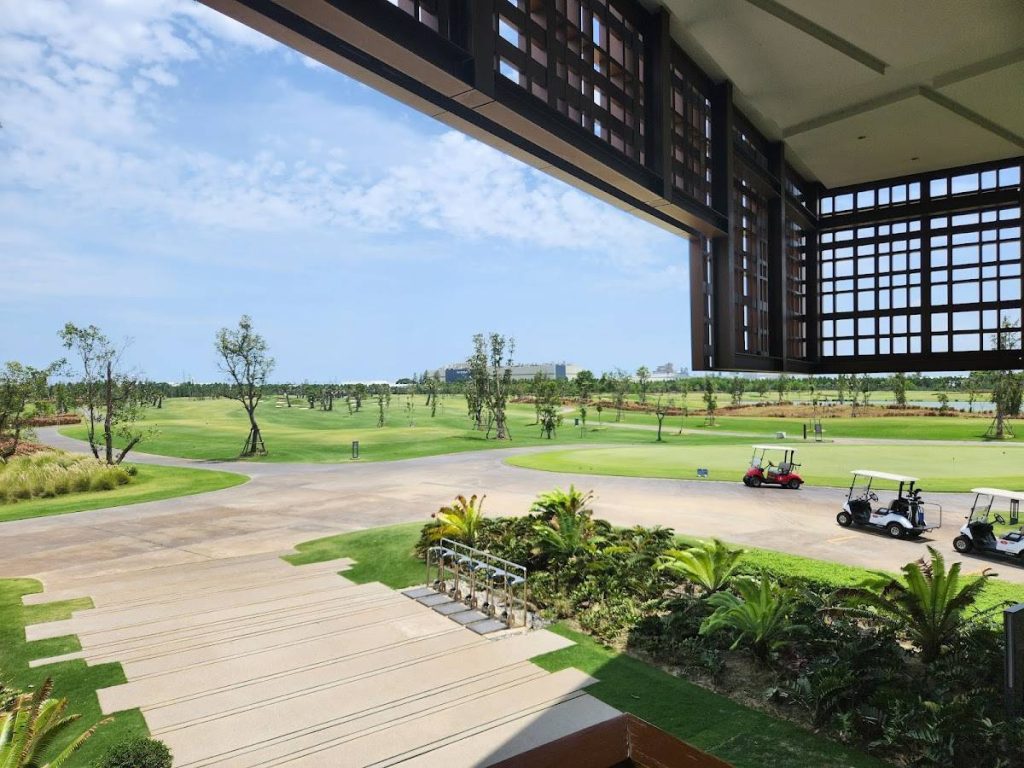
Siam Country Club Bangkok is an 18-hole, par-72 course in the Bang Sao Thong district of Samut Prakan. It measures about 7,250 yards. The architect is Toby Cobb, who learned his trade under Coore & Crenshaw and Tom Doak, and for whom this Bangkok course was a first solo project.
The Siam Country Club name is unavoidable in any conversation about golf in Thailand. The group runs five courses, four of them in Pattaya. This is the only one near Bangkok.
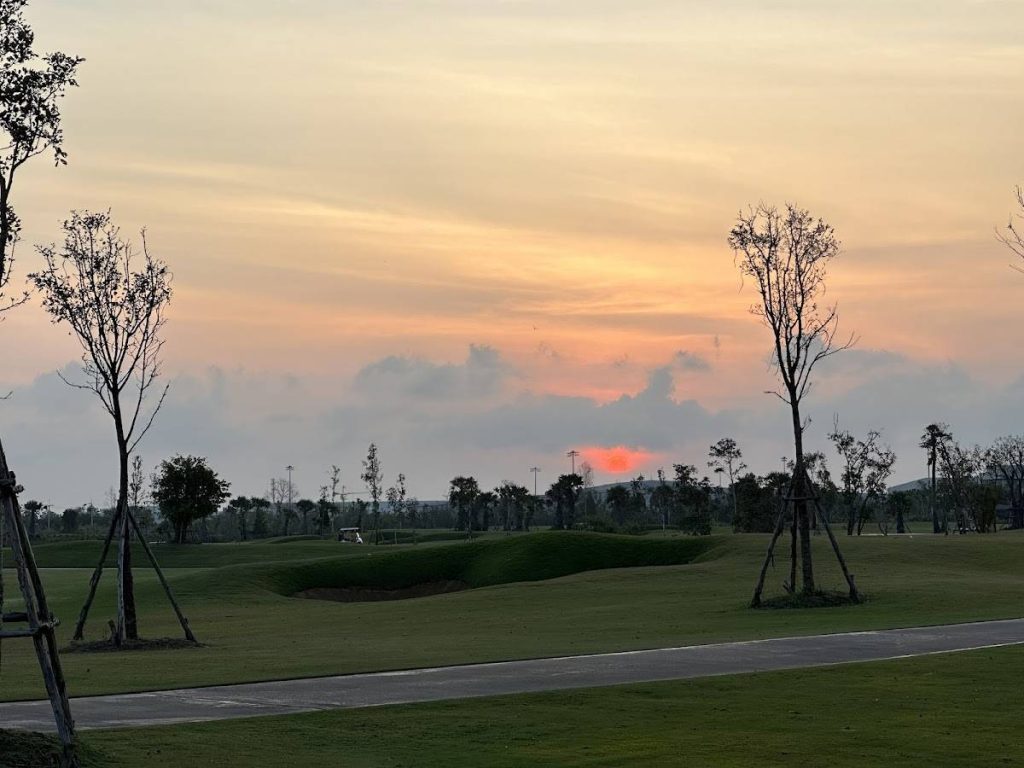
The course reads clearly: wide fairways, water hazards placed with intent, and bold bunkering. The fairways are planted with zoysia and the greens with ultra-dwarf Bermuda.
And the greens are the main event. Ranging from 425 square metres to as much as 1,000, they are shaped as turtle-backs. The 18th in particular is an unusual finish: a par 3 with a green of 1,000 square metres. Check today’s tee times and rates on the GoGolf app or website.
Rates and booking
Green fees vary by day of the week, public holidays, season and timing. The rates shown on GoGolf reflect these in real time as closely as possible, so please check the GoGolf app or website for current pricing.
Price summary
Green fee + cart, per playerTHB5.750to6.800
| AM from | PM from | |
|---|---|---|
| Weekday | THB 5.750 | THB 5.750 |
| Weekend & holiday | THB 6.800 | THB 6.800 |
Price calendar
18 Oct – 10 Nov 2026 · THBWeekend & holiday rateNo tee timesM = million THB, lowest of each half-day
Book more easily with the GoGolf app


Course information
| Location | 111 Moo 2, Bangna-Trad Parallel Road, Sisa Chorakhe Yai, Bang Sao Thong, Samut Prakan 10570 |
|---|---|
| Designer | Toby Cobb (formerly of Coore & Crenshaw Design) |
| Holes | 18 holes, par 72 |
| Length | About 7,250 yards |
| Fairway grass | Zoysia |
| Green grass | Ultra-dwarf Bermuda |
| Greens | Turtle-back. 425 to 1,000 square metres |
| Bunkers | Pot-style grass bunkers placed with intent |
| Signature hole | The par-3 18th (a 1,000-square-metre green and the bunker known as “Big Ass”) |
| Clubhouse | Luxury facilities |
| Group | The only one of Siam Country Club’s five courses near Bangkok |
| Telephone | +66 2 078 3888 |
| Official site | siamcountryclub.com |
| Rates | Vary by day, season and tee time. Check current rates on the GoGolf app or website |
Toby Cobb, the architect
The key to understanding this course lies in the architect’s background.
Toby Cobb learned his trade under Coore & Crenshaw Design and Tom Doak. Those two names represent the minimalist current in contemporary golf architecture — moving as little earth as possible and building strategy out of the natural shape of the land.
And this Bangkok course was Cobb’s first solo project. An architect who has absorbed his teachers’ thinking designing a whole course under his own name for the first time. In that sense, his approach shows through strongly here.
The decision to make the fairways wide
What minimalist designs share is a refusal to create difficulty by narrowing the fairways. Narrow them and anyone finds it hard, but that is a different thing from interest.
The fairways at Siam Country Club Bangkok are generously wide. That does not mean anywhere will do. The places from which the next shot is easy are limited, and whether you can find them changes your score. Difficult precisely because you have options — a thoroughly contemporary idea.
Turtle-back greens as the central problem
The character of this course shows most strongly in the greens.
They run from 425 square metres to as much as 1,000, which is large by any standard. And the shape is a turtle-back: raised in the middle and falling away towards the edges.
“On the green” means something else here
On a turtle-back green, a ball that lands on the surface can run off it. Land away from the middle and it follows the slope, rolling until it is off the green altogether.
So on this course you are not thinking “aim at the green” but “which height on the green do I land it”. Big does not mean safe.
The putting is not simple either
Even having found the surface, you can be left with a putt that crosses the crown in the middle. Up and then down is hard to judge for pace, and a three-putt becomes a realistic prospect.
The remedy is to finish on the same tier as the flag. Not just matching the distance but deciding which section of the green you are aiming at before you swing. That single step changes your putt count a great deal.
The 18th: choosing to finish with a par 3
Most courses make the closing 18th a par 4 or a par 5, because that makes a dramatic finish easier to build.
This one ends with a par 3. And its green is 1,000 square metres — the largest on the course. Off to the side waits the enormous bunker known as “Big Ass”.
The tension of a single shot
What a par-3 finishing hole means is plain: there are no excuses. On a par 4 or par 5 you can recover from a poor tee shot with your second. On a par 3, that one shot is the result.
A thousand square metres looks at first like a reprieve. But because it is a turtle-back, where you land it changes the difficulty of the putt entirely. And miss it, and the enormous bunker is waiting.
As a closing hole for matchplay or a competition, it is about as dramatic as a setting gets. Some say the hole alone is worth the visit.
Zoysia and ultra-dwarf Bermuda
The grass affects how the game feels directly. Here the fairways are zoysia and the greens are ultra-dwarf Bermuda.
Zoysia fairways
Zoysia is a densely growing grass that sits the ball up on top of the sward. The club goes in cleanly and it is harder to hit it fat or thin. Those are the conditions that make iron play more repeatable.
Ultra-dwarf Bermuda greens
Ultra-dwarf Bermuda is widely used at high-quality courses in recent years because it produces fast greens. It can be cut very low, so the roll is quick and uniform.
Which means the greens here are large, contoured and fast. Combine turtle-back slope with a quick roll and the demand on your pace control rises a level. Putting practice before you start is not a step you can skip here.
Location and access
Siam Country Club Bangkok is in Sisa Chorakhe Yai, in the Bang Sao Thong district of Samut Prakan. As the address says, it sits on the service road running alongside Bangna-Trad Road.
That road is the axis along which the courses of Samut Prakan are concentrated. Lakewood, Green Valley, Subhapruek and Ballyshear all line it, which makes an itinerary of several courses easy to build.
It also lies towards Suvarnabhumi International Airport, so fitting it into an arrival or departure day is entirely realistic.
For transport, use a company car or your own vehicle, or a ride-hailing service such as Grab, which is common in Bangkok. Journey time varies with traffic, so leave with time in hand. Please note that GoGolf does not arrange transfers or shuttles.
How to think about scoring
The key to putting a score together here comes down to one thing: whether you can decide where on the green to land it.
- Aim at a tier, not just the green. On a turtle-back, finishing on the same section as the flag is the first priority.
- Do not relax because the green is big. A putt that crosses the crown is hard to judge for pace.
- The fairways are wide, but the right places are few. Prioritise the angle that makes the next shot easy.
- Avoid the pot bunkers. With real depth, your arithmetic goes wrong the moment you are in one.
- The water is placed with intent. You can see it, so whether you take it on is your own call.
- Concentrate on one shot at the 18th. A course that finishes with a par 3 gives you nothing to relax into.
- Practise your putting before you start. Time spent getting used to fast, heavily contoured greens is essential.
At about 7,250 yards it is long even by the standards of courses around Bangkok, but that is the figure from the back tees. Choosing a tee that fits you is the precondition for enjoying this course.
Common mistakes, and how to avoid them
1. Relaxing once you are on the green
On a turtle-back green, depending on where it lands the ball runs off. A shot you thought had finished on the surface comes back to you. Whether you experience that in the opening holes changes how you build the rest of the round.
2. Aiming only at the flag
On a green of 1,000 square metres, the pin position and the landing spot are not the same thing. Which section do you have to land on to finish on the flag’s tier? Think that far before you choose a club.
3. Skipping the putting practice
Ultra-dwarf Bermuda greens are fast, and turtle-back slope is added on top. That combination is not something you can adjust to on sight. Ten minutes before you start reliably protects several shots.
4. Swinging without a plan on a wide fairway
Wide means you have options. Not “anywhere will do” but “I am putting it here”. The strategy the architect prepared only becomes visible to the player who makes that decision.
5. Letting your attention drop at the 18th
A par-3 finish decides the result in one shot. Nor should you forget the enormous bunker waiting. Thinking about your club for the 18th as you finish the 17th lets you play it composed.
The clubhouse and facilities
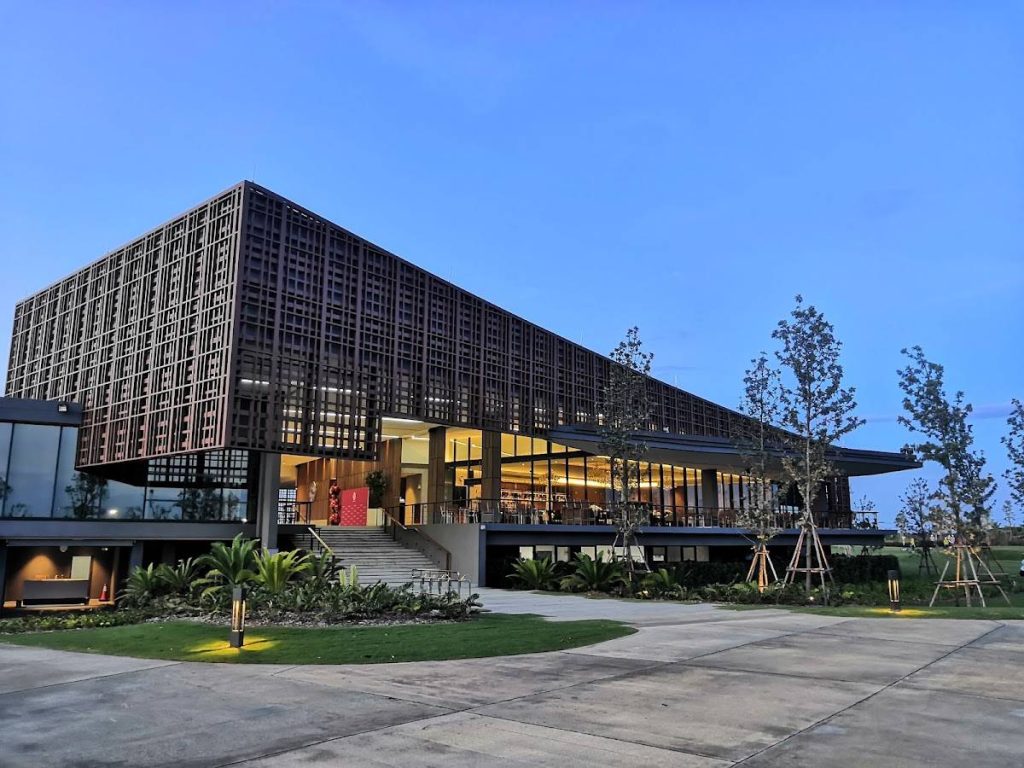
The clubhouse has luxury facilities. The standard the Siam Country Club name carries is maintained here too.
The operation and hospitality developed across the Pattaya courses are shared with this course near Bangkok. That it works for entertaining or hosting guests has practical value.
Caddies and spikes
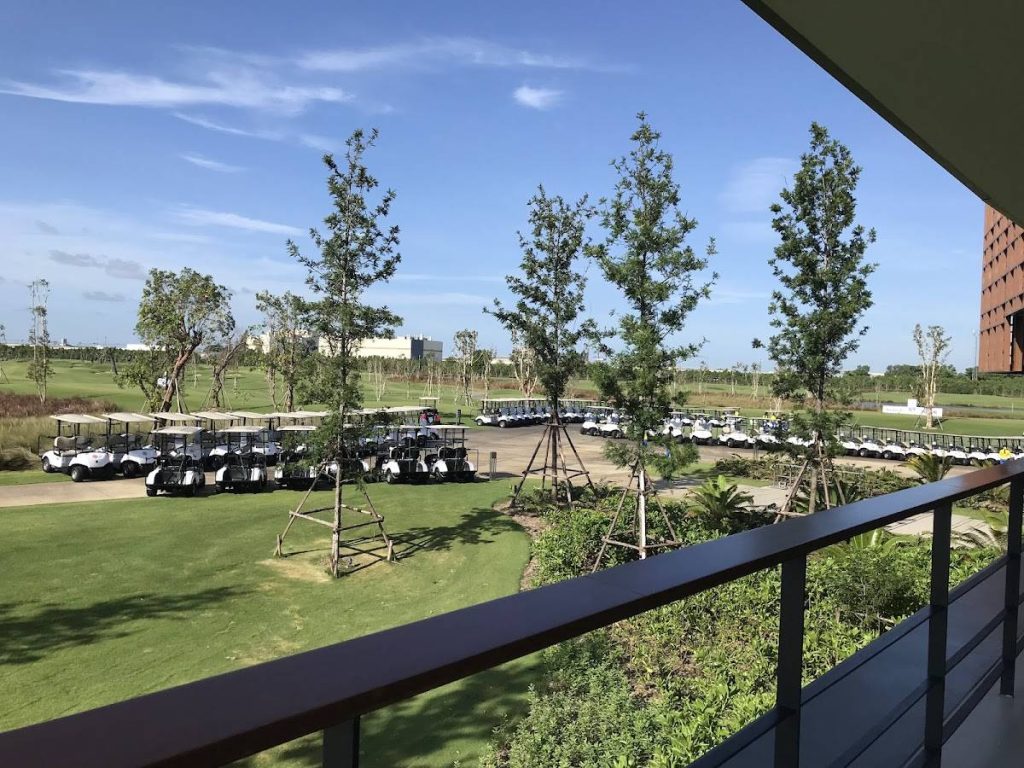
As is customary in Thailand, a caddie accompanies you. On a course with this many heavily contoured greens, being able to ask for a read on the line is especially valuable.
The best season and time of day
The dry season from about November to February is the most comfortable, and the period when the greens are most likely to be at their best. If you want to experience fast greens as intended, that is the season.
In the hot season from March to May the daytime temperature climbs, so an early start keeps the toll down.
The rainy season from June to October is mostly a short afternoon squall passing through. A morning round is less affected, and tee times are comparatively easy to get. After rain the greens soften, though, and the run produced by the turtle-back slope can weaken.
Who this course suits
- Anyone who wants to experience a new design: the first solo work of an architect in the Coore & Crenshaw / Tom Doak line.
- Anyone testing their work on the greens: turtle-backs combined with a fast roll are not easily found elsewhere.
- Entertaining and hosting guests: the brand and the clubhouse meet the occasion.
- Better players: about 7,250 yards, and with the greens included there is real substance.
- Anyone who prefers a wide fairway: this is not a design that squeezes you off the tee.
- Anyone staying near the airport: it lies towards Suvarnabhumi, so it fits an arrival or departure day.
On the other hand, because it asks for delicate pace control on the greens, anyone who struggles with putting may find it hard going. In that case, committing to aiming at the high middle of the green rather than the flag will keep the score from coming apart.
How it differs from other courses in Samut Prakan
The courses along Bangna-Trad Road have distinctly different characters. To place Siam Country Club Bangkok among them, it helps to set it beside the other courses in the area bookable through GoGolf.
What is distinctive here is the shaping of the greens. Sizes from 425 to 1,000 square metres, with turtle-back slope. The greens alone carry the story of a round — which makes the experience different from anywhere else.
Combining it with other courses in Samut Prakan
If you are playing several rounds during your stay, pairing this with neighbouring courses keeps the travel down.
- Ballyshear Golf Links — a Gil Hanse design and a much-discussed course of classical template holes.
- Lakewood Country Club — 27 holes, recombined for a different round each time.
- Subhapruek Golf Club — designed by Pete Dye and his son, with an island green waiting.
- Green Valley Country Club — a course with striking sleeper-faced bunkers.
Availability and rates for the whole area are on the Samut Prakan golf booking page.
In summary
The case for Siam Country Club Bangkok comes down to three things.
- The design — the first solo project of Toby Cobb, in the Coore & Crenshaw / Tom Doak line.
- The greens — turtle-backs of 425 to 1,000 square metres, running fast on ultra-dwarf Bermuda.
- The 18th — the decision to finish with a par 3, on a 1,000-square-metre green beside an enormous bunker.
Siam Country Club Bangkok is 18 holes, par 72, about 7,250 yards. The wide zoysia fairways let you swing freely off the tee, and the greens are where you are truly tested. Within the Siam Country Club group, it is the only course near Bangkok.
Check today’s tee times and rates on the GoGolf app or website.
Frequently asked questions
Where is Siam Country Club Bangkok?
Is this different from Siam Country Club in Pattaya?
How many holes is it, and what is the par?
Who designed the course?
What defines the greens?
How should I attack the greens?
Which is the signature hole?
What grasses are used?
Where is the difficulty?
Can a beginner play here?
What is the clubhouse like?
Is a caddie required?
What is the best season and time of day?
How much does it cost?
Is there a transfer service?
More Golf Courses in Samut Prakan
Swipe to see more courses →