


Last updated: August 19, 2026
Greenwood Golf and Resort is a 27-hole course in Klong Kiew, Ban Bung district, Chonburi province. It is made up of three championship nines and has been operating since 1993.
The design is the work of Peter W. Thomson, the Australian who won the Open Championship five times and went on to design courses across Asia after he retired.
The character of the course sits between parkland and links. Tree-lined fairways, deep bunkers, rough ground of native grasses, and gentle undulation. It has a rather different face from the resort scenery the phrase “a golf course in Thailand” usually suggests.
Twenty-seven holes also means three ways to build an eighteen. Come back to the same course and a different combination gives you a different round. Check today’s tee times and green fees in the GoGolf app or website.
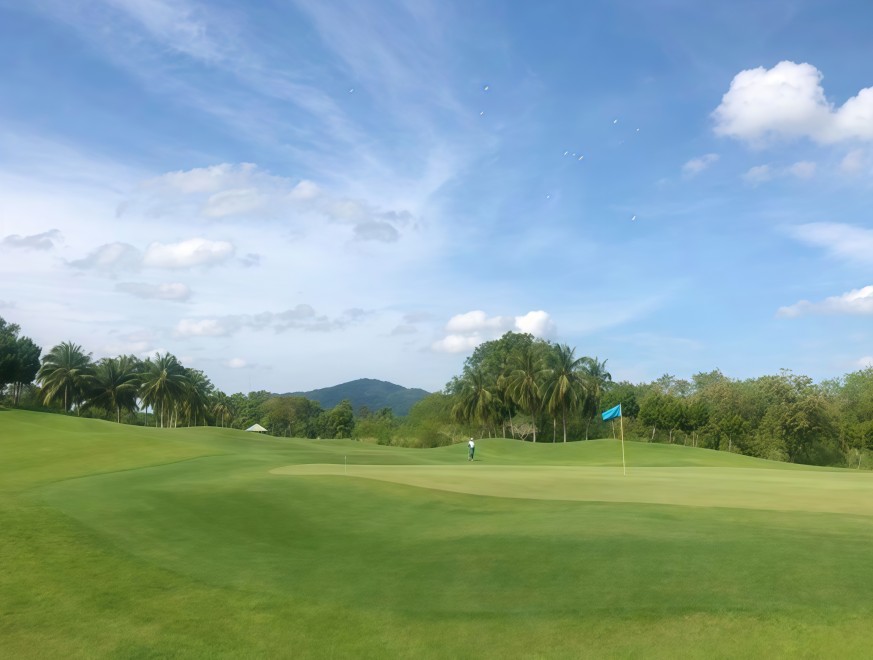
Green fees and booking
Green fees vary by day of the week, public holidays, season and timing. The rates shown on GoGolf reflect these in real time as closely as possible, so please check the GoGolf app or website for current pricing.
Price summary
Green fee + cart, per playerTHB1.700to1.900
| AM from | PM from | |
|---|---|---|
| Weekday | THB 1.700 | THB 1.700 |
| Weekend & holiday | THB 1.900 | THB 1.700 |
Price calendar
25 Sep – 22 Oct 2026 · THBWeekend & holiday rateNo tee timesM = million THB, lowest of each half-day
Book more easily with the GoGolf app


Course information
| Address | 88/8 Moo 6, Tambon Klong-Kiew, Ban-Bung, Chonburi 20220 |
|---|---|
| Designer | Peter W. Thomson |
| Designer’s record | Five Open Championships (1954, 1955, 1956, 1958, 1965) |
| Operating since | 1993 |
| Holes | 27 holes (three championship nines) |
| Combinations | Pick two of the three nines for three possible eighteens |
| Course type | Combines the characters of parkland and links |
| Character | Tree-lined fairways, deep bunkers, native grasses, gentle undulation |
| Setting | Inland from Pattaya, towards Chonburi |
| Access | About an hour by car from Pattaya |
| Phone | +66 89 833 8948 |
| Official website | gwgolfclub.com |
| Green fees | Vary by day, season and time. Check current rates in the GoGolf app or website |
Peter Thomson, the architect
In understanding Greenwood, knowing who designed it is decisive.
Five-time Open champion
Peter W. Thomson was an Australian professional golfer who won the Open Championship five times.
He won three years running in 1954, 1955 and 1956, and again in 1958 and 1965. Three consecutive Opens is a record no one else matched in the twentieth century.
A player who kept winning on links
This is the important part. The Open is played on links courses.
Wind, firm turf, deep pot bunkers, and the running approach shot. Thomson was a player who kept winning in that environment.
That experience shaped his thinking as an architect. Leave the ground game as an option, not just the air game — that is the idea at the base of a Thomson design.
Designing in Asia
After retiring, Thomson designed courses across Asia. Greenwood is one of them, operating since 1993.
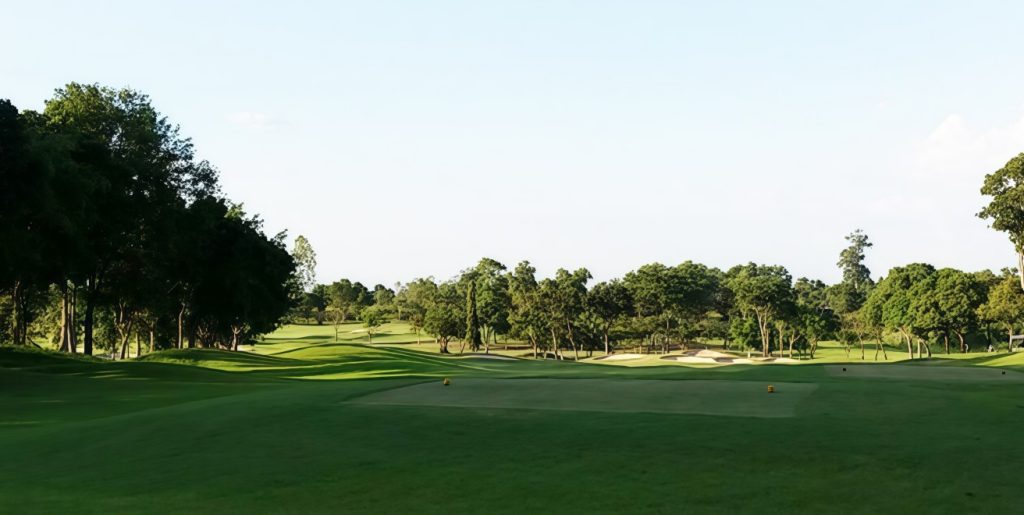
Between parkland and links
The character of Greenwood is described as combining parkland and links.
The parkland side
Tree-lined fairways. That is a parkland feature.
Operating since 1993, the trees have grown in. A curved ball gets blocked by them, and you find yourself unable to go straight at the green with the second shot.
The links side
On the other hand: deep bunkers, rough ground of native grasses, and gentle undulation. That is links vocabulary.
Native grasses in particular are an unusual element on a Thai course. Beyond the edge of the fairway, unmown natural grassland opens up. Get in there and you are forced into a get-out-first decision.
What the mixture means
When those two characters mix, you have to switch your approach hole by hole.
On holes where the trees matter, direction comes first. On holes where the native grasses and the undulation matter, you have to predict where the ball will come to rest.
This is not a course you get round with one swing for all eighteen holes. That is what makes Greenwood interesting.
Twenty-seven holes
Greenwood has 27 holes, made up of three championship nines.
Three possible eighteens
There are three ways to pick two nines out of three. Which means three different eighteens exist.
Play a different combination on your second visit and the same course gives you a fresh round. It is an easy course to come back to.
Check the day’s combination in advance
Which nines are in use can change from day to day. Maintenance or a tournament can close one of them.
If you want a particular combination, confirming it at the time of booking is the reliable move.
What 27 holes means to run
Maintaining 27 holes means managing one and a half times the area of an eighteen.
That a course has kept that up since 1993 is one indicator of how steadily it is run.
Preparing for the deep bunkers
Deep bunkers are listed among Greenwood’s features.
Links vocabulary
A shallow bunker you can get out of with a normal bunker shot. But from a deep bunker, getting out is the objective.
That an architect who kept winning the Open placed deep bunkers here is not without meaning.
Staying out of them
The best answer to a deep bunker is not to be in it.
Check where the bunkers are from the tee and choose either a club that will not reach or one that carries past. The in-between distance is the dangerous one.
If you do end up in one
From a bunker with a high face, do not go at the pin — think only about getting out.
Get out in one and you keep it to a bogey. Force it and spend two or three, and that single hole takes your card apart.
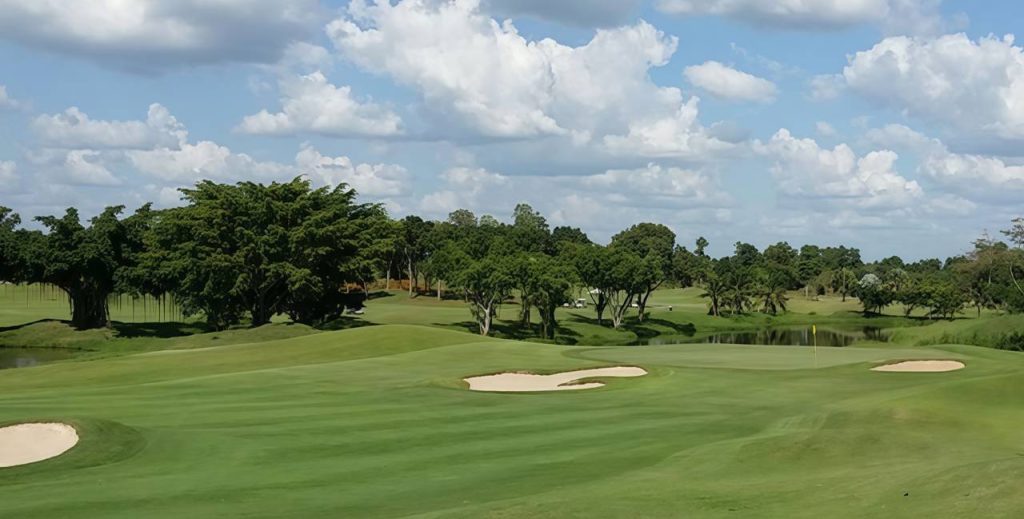
Native grasses and undulation
What native grasses are
Unmown, natural grassland. A common element on links courses, spreading out beyond the fairway.
Get in there and you start by finding the ball. Find it, and the grass grabs the club so you cannot strike it cleanly.
There is one answer
Get out first. That is all of it.
Take a lofted club and think only about returning to the fairway. Try to gain distance and the grass wins, and you end up somewhere deeper.
Gentle undulation
The fairways at Greenwood carry gentle undulation.
Undulation means the lie changes depending on where the ball stops. Ball above your feet, below your feet, uphill, downhill.
For a golfer who can only play from flat ground it feels hard. Put the other way round, anyone used to playing from slopes will find it an easy course to perform on.
Options around the green
Undulation also means the option of running the ball up appears around the greens.
The feel Thomson developed on links — not only lofting it but running it — is reflected in this design too. Try a putter or a hybrid from off the green.
How to build the eighteen holes
Early holes — read the course
What you want to establish in the first few holes is how the trees bite and where the bunkers sit.
The feel changes with the combination of nines you are playing that day. Ask your caddie early and get a sense of the course’s tendencies.
Middle holes — settle your judgement
In the middle you settle your approach on the basis of what the opening holes told you.
Separate the holes where you take driver from the ones where you lay up. Either stay short of the deep bunkers or carry them. Once that judgement steadies, so does the score.
Closing holes — stay out of the native grasses
This is when fatigue shows. As the shots start to scatter, you find the native grasses more often.
In the closing stretch, direction over distance. One club less, placed reliably on the fairway, produces the better score in the end.
How to read a Thomson design
Understand the architect’s thinking and you start to read the intent of the course. There are several consistent features in Peter Thomson’s work.
He makes you use the ground
That Thomson was a player who kept winning on links shows directly in the design.
The front of the greens is left open, so the option of running the ball on remains. He does not build a course that can only be played through the air — that is the basic stance of a Thomson design.
Which also means there is a route left for the golfer who cannot hit a high ball.
The punishment is explicit
On the other hand, there is a clear penalty for missing. Deep bunkers, and native grasses.
Not a vague penalty, but hazards placed where you know that getting in costs you a shot.
Which is to say it is a design where you can calculate the risk and the reward while you are still on the tee.
He uses the natural ground
The gentle undulation reads less like large-scale earthmoving than like the original ground being used.
So the slopes fall naturally, and each hole has a face of its own. You do not get textbook flat lies all the way round.
What to take away
Play with those three in mind and you start to see “why is the bunker there” and “why are they making me come in from this angle”.
Playing a round while reading the design is a more enjoyable experience than the score itself.
How to choose your combination of nines
Pick two of the three nines. That choice decides the character of the day’s round.
On a first visit
The first time, following the order the course sets as standard is the safe move. It is the combination the operators judged flows best.
Get a feel for the whole first, and experience how the deep bunkers and the native grasses are arranged.
On later visits
This is where 27 holes pays off. Choose a combination that includes the nine you did not play, and you get a completely new nine holes.
Out of the same clubhouse, on the same rate card, you play a different course. The value of a repeat visit comes from this structure.
If you want to play 36
Playing more than 27 holes in a day is also an option. In that case the heat and how you ration your energy are the main challenge.
An early start with eighteen in the morning, a break, and the rest in the afternoon is the realistic plan. Do not forget water and salts.
Confirm when you book
Which nines are in use changes from day to day. If you have a preference, confirming it at the time of booking is the reliable move.
The trees as a strategic element
This is a course more than thirty years on from 1993. The trees planted then have grown in.
Height starts to matter
A young tree lets a slightly curved ball go over. A mature one does not.
The moment the tee shot curves, going straight at the green with the second becomes impossible.
Your options on the second
Blocked by a tree, you have three options.
- Over it — if you can hit it high. Fail and it hits the tree and drops short.
- Around it — a deliberate hook or slice. Difficult.
- Sideways — back to the fairway and play the third. The most reliable.
If you want to hold a score together, the moment you hesitate, go sideways. On a par 4 that is a green in three and a bogey. That is enough.
The value of not curving it
In the end, on a course where the trees bite, keeping the fairway goes up in value.
One club less, placed reliably on the fairway, beats a driver hit far and curved.
How the day runs
From arrival to your start
Check the combination of nines you are playing. On a 27-hole course, which nine you go out on changes the impression of the opening holes.
What you want to confirm before you start is the speed of the greens and how your wedge comes out. Getting out of the deep bunkers and getting close around the greens are what decide your score here.
The opening holes
In the first few holes, establish how the trees bite and where the bunkers sit. Questions to your caddie are worth most early.
The turn
This is inland, where the sea breeze does not reach. The temperature feels higher, so take the break deliberately.
Rehydrate, and change your shirt if you can. It changes your performance on the back.
After the round
A tip for the caddie is customarily given in cash. Having small notes ready keeps it smooth.
How to think about your score
- Stay out of the deep bunkers. Either a club that will not reach or one that carries past. The in-between is the dangerous one.
- From the native grasses, get out first. Try to gain distance and you end up somewhere deeper.
- Manage your direction with the trees in mind. Trees grown since 1993 limit your options on the second.
- Be ready for sloping lies. With gentle undulation, you will not always be on flat ground.
- Keep the running approach as an option. This is a course with a links character. Lofting it is not the only answer.
- Confirm the combination when you book. Which nines you play changes the impression of the course.
Greenwood is a course where judgement counts for more than distance. Remember that the architect was a player who kept winning on links and the direction of your plan becomes visible.
Common mistakes, and how to avoid them
1. Going at the pin from a deep bunker
Go at the pin from a bunker with a high face and you can fail to get out and end up back in the same bunker. A hole that would have been a bogey with one clean escape becomes a double or worse.
2. Trying to gain distance from the native grasses
In a situation where the grass stops you striking it cleanly, forcing distance puts you somewhere deeper. A lofted club back to the fairway is the shortest route.
3. Not counting the trees in
Trees grown since 1993 have real height. The moment the tee shot curves, going straight at the green with the second can become impossible. This is a course where not curving it is worth a lot.
4. Swinging as usual from a sloping lie
With gentle undulation, you will not always be playing from flat ground. Without adjusting your stance and the length of your swing to the slope, the ball will not go where you intend.
5. Thinking only about the air game
On a course with a links character, the running approach is effective in places. Think only about lofting it and you make an approach that should have been simple harder than it is.
Location and access
Greenwood is at 88/8 Moo 6, Tambon Klong-Kiew, Ban-Bung, Chonburi 20220.
Inland from Pattaya
Ban Bung district is inland from Pattaya. According to guides such as PattayaGolf.net, it is about an hour by car from Pattaya.
Away from the coastal resort area, the surroundings become quiet countryside. That setting suits a course where parkland and links are mixed.
Getting there
Travel by company car or your own car, or use a ride-hailing service such as Grab, which is common in Bangkok.
This is an inland course, so it is worth planning the ride home in advance. Note that GoGolf does not arrange transfers or shuttles.
Coming from Bangkok
You take the main road from Bangkok towards Pattaya, then turn inland via the town of Chonburi.
Travel time depends on the traffic, so leave with plenty of margin before your tee time.
How it differs from the other Chonburi courses
Chonburi province, which includes Pattaya, is the golf region of eastern Thailand. Here is where Greenwood sits alongside the main courses in the area bookable through GoGolf.
- Greenwood Golf and Resort: 27 holes. Peter Thomson design, operating since 1993. Between parkland and links. Deep bunkers and native grasses.
- Burapha Golf and Resort: 36 holes. David Graham & Gary Panks, opened 1993. East and West have different characters.
- Amata Spring Country Club: 18 holes / par 72 / about 7,470 yards. Lee Schmidt, opened 2005. The 17th island green reached by boat.
- Chee Chan Golf Resort: 18 holes / par 72 / about 7,345 yards. David Dale, opened 2018. The Khao Chee Chan Buddha in view from every hole.
- Bangpra Golf Club and Resort: 18 holes / par 72 / about 7,393 yards. Opened 1958. A classic course with mature trees.
What makes Greenwood distinct in that company is that it brings links vocabulary to Thailand. Deep bunkers, native grasses, gentle undulation. Elements chosen precisely because the architect won five Opens.
Facilities and services
The clubhouse and the resort
As the word “resort” in the name suggests, the facilities assume a stay, not only the golf.
A clubhouse and restaurant support a course of 27 holes.
Caddies and carts
A caddie accompanies your round.
On a 27-hole course, the impression changes with the combination of nines you are playing that day. On a first visit, what your caddie knows is especially valuable.
Where the deep bunkers are, where the native grasses begin, the slope of the greens. All of it is worth asking about.
Booking
For the day’s availability and rates, please check the GoGolf app or website. If you want a particular combination of nines, confirming it at the time of booking is the reliable move.
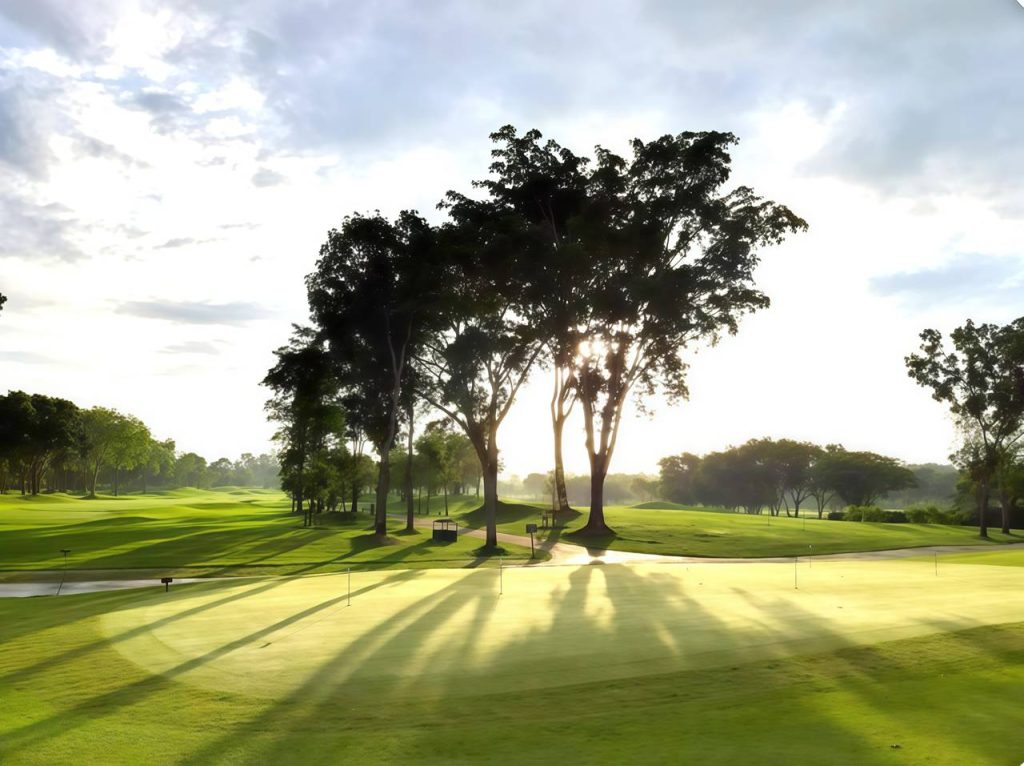
What the clubhouse holds
PattayaGolf.net says the clubhouse has locker rooms, a restaurant overlooking the course, and a pro shop. Golfsavers describes the clubhouse as refurbished, with the changing facilities and the restaurant well regarded.
These are not facilities competing with the top courses on luxury. Think of it as a course with practical, adequate provision that supports the scale of 27 holes without strain.
Practice
The club’s own site lists a driving range among the main facilities. Global Golf Holidays lists a putting green and a short-game practice area alongside the driving range.
This is a course where pot bunkers, native grasses and rolling fairways all bite. Arriving a little early to check your swing tempo makes it easier to avoid a large mistake on the 1st.
What to bring
- Spare balls — in the native grasses a ball can go unfound. Bring a few extra.
- A lofted wedge — you need it to get out of the deep bunkers.
- Sunscreen and a hat — inland, where the temperature feels higher.
Because you will be playing from slopes often, checking your footing in the practice area before you start lets you settle from the opening holes.
Best season and time of day
The dry season from around November to February is the most comfortable. Humidity drops and the turf firms up.
When the turf firms up, the links character comes out strongly. The ball runs, and the option of running the approach comes alive. It is the season in which you feel this design’s thinking most.
In the hot season from March to May daytime temperatures climb. Prioritise a morning slot. This is inland, where the sea breeze does not reach, so a midday round takes more out of you.
In the rainy season from June to October most days bring a short shower through in the afternoon. A morning round is little affected, and tee times are easier to get in this period. After rain the native grasses get heavier still, which makes the get-out-first judgement matter all the more.
Who this course suits
- Anyone who chooses by architect: a design by five-time Open champion Peter Thomson.
- Anyone who likes links golf: deep bunkers, native grasses, gentle undulation. The running approach is available.
- Anyone who wants to visit the same course more than once: 27 holes gives you three possible eighteens.
- Anyone who wants to compete on judgement: a course where how you build your plan counts for more than distance.
- Anyone after a mature course: operating since 1993, with trees fully grown in.
- Anyone staying in Pattaya willing to go a little further: about an hour by car.
On the other hand, if you only want to play from flat lies, or want to avoid the resistance of rough, it may feel difficult. In that case a strategy built on direction and keeping the fairway is the effective one.
Combining it with other Chonburi courses
If you are playing several rounds during a stay, pairing nearby courses keeps the travel down.
- Burapha Golf and Resort — 36 holes; East and West have different characters.
- Amata Spring Country Club — the 17th island green reached by boat is its signature.
- Chee Chan Golf Resort — the Khao Chee Chan Buddha is in view from every hole.
- Bangpra Golf Club and Resort — a classic course that opened in 1958.
Availability and rates for the whole area are on the Bangkok golf booking page.
Before you book
- The combination of nines — with 27 holes there are three. If you have a preference, confirm it when you book.
- Your tee time — an early start is realistic in the hot season. In the dry season the turf firms and the links character comes out.
- Spare balls — in the native grasses a ball can go unfound.
- How you will travel — about an hour by car from Pattaya. Think about the ride home too.
- Your playing partners’ level — with sloping lies and deep bunkers, a beginner may find parts of it hard.
- The day’s rates and availability — check in the GoGolf app or website.
Slots fill quickly in the dry-season high season, so securing one as soon as your dates are set is the safe move.
Choosing inland Chonburi
The golf courses around Pattaya divide in character between the coast and the interior.
Coastal courses
The coast gives you resort scenery and the sea breeze. It combines easily with sightseeing, and the travel from your hotel is short.
Inland courses
Ban Bung district, where Greenwood is, is inland from Pattaya.
The sea breeze does not reach, so you feel the heat, but in exchange you can concentrate on the golf in quiet surroundings. Away from the noise of the tourist areas, facing the course itself.
Which to choose
If you are playing only one round in the itinerary, the shorter travel of the coast may be the rational choice.
But if you are building several rounds, putting one inland course into the week changes the impression of the trip. Greenwood in particular is one of the few courses with links vocabulary.
Golf in the same country, and a completely different experience.
Summary
In short, there are three reasons to choose Greenwood.
- The architect — Peter Thomson, five-time Open champion. The thinking of a player who kept winning on links is reflected in it.
- The character — between parkland and links. Trees, deep bunkers, native grasses, gentle undulation.
- 27 holes — three championship nines give you three possible eighteens.
Greenwood Golf and Resort has been operating since 1993, and the trees have grown in enough to give the course real maturity.
It is a course where judgement counts for more than distance. Stay out of the deep bunkers, get out of the native grasses first, and keep the running approach as an option. Holding those three in mind changes the score considerably.
About an hour by car from Pattaya. It is a course for a day when you want golf with a different face from the coastal resorts. Check today’s tee times and green fees in the GoGolf app or website.
Frequently asked questions
Where is Greenwood Golf and Resort?
How many holes are there?
Who designed it?
How long has it been operating?
What is the course like?
What are native grasses?
Are the bunkers difficult?
Can a beginner play here?
Can I choose which nines to play?
How should I play around the greens?
How long does it take from Pattaya?
Is a caddie included?
When is the best season to play?
What should I bring?
What makes it different from the other Chonburi courses?
How much do the trees matter?
What characterises a Thomson design?
Can I play 27 holes in a day?
Is it worth a second visit?
What should I check before I start?
Coastal course or this one?
Is there a practice range?
I hear there are a lot of sloping lies. Is there anything I can do?
How much does it cost?
Is a transfer available?
More Golf Courses in Chonburi
Swipe to see more courses →