In the world of golf training—particularly at driving ranges and simulator facilities—the term “1 bay” frequently comes up as a fundamental element supporting a golfer’s practice experience. Though it may sound simple, a bay in the context of golf plays a crucial role as a personal training space where players refine their technique and improve shot performance.
This article from GoGolf explores in detail what a “1 bay” means in golf, its physical characteristics, primary functions, and how it’s applied in various modern training setups. This understanding is especially useful for beginners, range managers, or even investors looking to build a professional golf training facility.
Definition of “1 Bay” in Golf
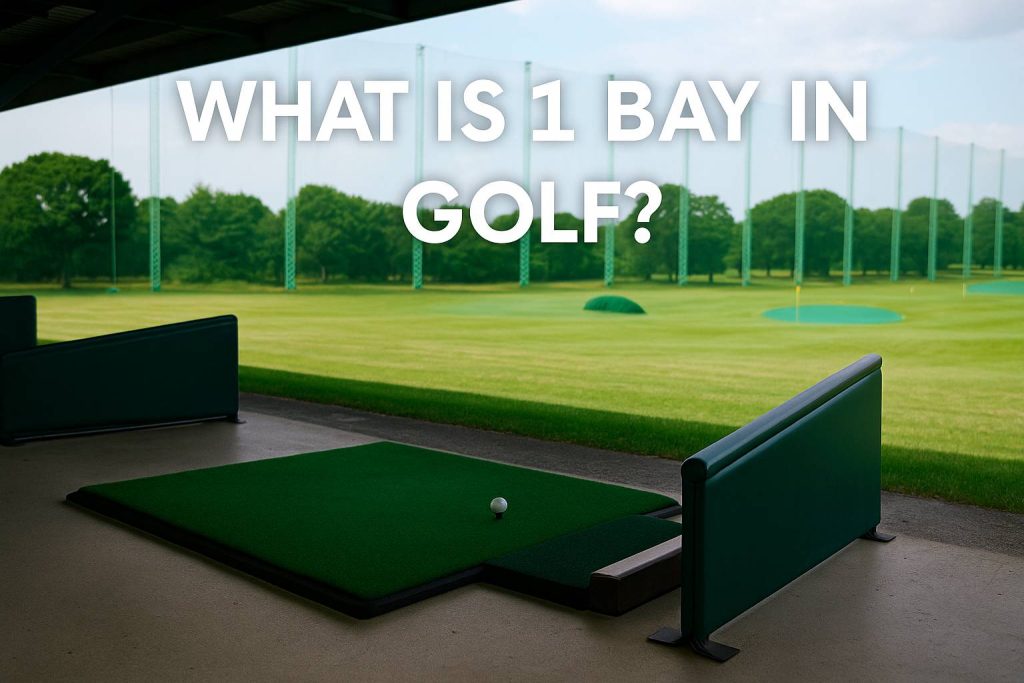
In golf, a “bay” refers to a single individual booth or station designated for one player at a driving range or golf simulator. This is the spot where the player stands and hits balls toward the range or a digital simulation screen. A bay is typically designed to support one golfer at a time, although it can occasionally accommodate two in a more casual setting.
The standard dimensions of a bay vary depending on the facility, but typically measure around 1.5 to 2 meters wide and 2.5 to 3 meters deep. This size provides enough room for a golfer to perform a full swing safely and comfortably. Bay design prioritizes safety, ergonomics, and space efficiency.
At modern facilities, a bay is more than just a physical space—it often includes digital technologies such as launch monitors, touchscreen interfaces, swing radars, motion analysis cameras, and advanced software that tracks and analyzes performance in real time.
Make golf booking effortless. Install GoGolf App now!
Primary Functions of a Golf Bay
A bay at the driving range is more than just a place to stand and hit balls. It is a strategically designed training station that caters to various needs of golfers. Here are the key functions of a golf bay:
1. Individual Practice Zone
The main function of a bay is to serve as a dedicated personal training space. Golfers can focus on fundamental techniques such as grip, stance, alignment, and swing path. Because each bay is isolated, players can concentrate without distraction from others.
In professional training environments, such as golf academies or national athlete development programs, each golfer is assigned their own bay. This allows for time efficiency and maximized productivity during structured practice sessions.
2. Equipment Testing Area
Golfers frequently use bays to test new clubs, balls with specific specs, or accessories like gloves and shoes. Practicing in a consistent bay environment helps players evaluate equipment performance accurately—especially when launch monitors are available.
Golf shops often feature fitting bays, specially designed spaces where players can be fitted for clubs based on swing stats and distance data.
3. Swing Evaluation Station
Bays are ideal for swing analysis, utilizing motion-capture cameras or swing radar analyzers. Players can review their swing videos to observe body positioning, club head speed, angle of attack, and ball spin rate. These data points are essential for performance improvement.
4. Game Simulation Experience
In golf simulators, a bay is not just a hitting space—it’s an immersive gaming zone. Players can select world-famous courses, play competitively, or enjoy gamified practice features.
Equipment and Facilities Commonly Found in a Bay
Even conventional driving ranges provide reasonably well-equipped bays, while professional and premium simulator venues offer more advanced features. Common components include:
1. Hitting Mats and Auto Tees
Bay floors are lined with high-quality synthetic mats that simulate real turf. Some modern facilities use automatic tee systems that adjust tee height according to player preference.
2. Club Racks and Seating
Each bay usually has a club rack for easy access to golf clubs, and a chair or bench so players can rest between swings or wait their turn.
3. Launch Monitors
These devices capture data such as ball distance, club speed, launch angle, and spin rate—vital for analyzing shot performance and optimizing club selection.
4. Swing Cameras and Data Displays
Advanced setups include swing cameras and digital displays showing real-time analytics, charts, and replay videos. These tools are particularly beneficial for seasoned golfers and professionals.
Types of Facilities That Use the Bay System
The bay concept has evolved and is now utilized in various types of golf facilities. Each facility offers a slightly different experience depending on user needs.
1. Traditional Driving Ranges
Outdoor driving ranges are the most common venues with bay systems. Dozens of bays are aligned side by side, and each golfer stands in a designated space with direct views of the practice field to observe shot distance and trajectory.
2. Indoor Golf Simulators
In indoor settings, bays are paired with simulators. Golfers hit balls into screens that visualize virtual golf courses. This is especially popular in countries with cold climates or in urban fitness centers.
3. Golf Entertainment Venues (e.g., Topgolf)
Entertainment-driven golf spots like Topgolf combine lounge-style setups with bay technology. Each bay includes sofas, dining tables, and ball-tracking systems. Visitors play fun game formats while enjoying food and drinks—making golf a social and accessible experience.
The Role of Bays in Modern Golf Industry Growth
In recent years, bay-based driving ranges and simulators have become central to the transformation of the golf industry. This model makes golf more inclusive, approachable, and enjoyable—especially for younger players.
From Exclusive to Accessible
Golf was once seen as an exclusive sport tied to expensive 18-hole club memberships. Now, thanks to the bay system and simulators, anyone can try golf without joining a club. This has broadened the market and revitalized the global golf scene.
A Time-Efficient Practice Option for Busy Golfers
Golfers with limited time can still fit in quality practice by booking a bay for 30–60 minutes. Bays allow for highly focused, distraction-free training sessions that make the most of players’ time.
Tech Innovations to Improve Skills
With tools like TrackMan, swing analyzers, and AI-powered feedback, modern bays deliver ultra-precise training environments. Even professional athletes now regularly use bays to sharpen their technique ahead of major tournaments.
Conclusion: A Small Space with Big Impact
A golf bay is far more than a small booth for hitting balls. It is a space for growth, experimentation, entertainment, and competition. From basic driving ranges to advanced simulators, the bay is the cornerstone for millions of golfers worldwide seeking to improve their game—or simply enjoy relaxing moments with friends and family.
For facility operators, understanding bay design and technology is essential to creating the best possible user experience. For golfers, recognizing the functions and potential of a single bay opens the door to more effective practice and sharper performance. And for beginners, the bay is the perfect place to fall in love with the game of golf.
1 Bay in Golf FAQ: Meaning, Function, Cost, Capacity, Etiquette, and Beginner Tips
1. What does 1 bay mean in golf?
In golf, 1 bay means one hitting station or individual space where a golfer stands and hits balls at a driving range or golf simulator. It is the player’s designated practice area for hitting toward an outdoor range, net, impact screen, or digital target.
2. Is 1 bay the same as 1 player?
Usually, 1 bay is designed for one golfer to hit at a time. In casual or entertainment-style golf facilities, several people may share one bay and take turns. For safety, however, only one person should swing and hit a ball at any moment.
3. What is the main function of a bay at a driving range?
The main function of a bay is to give each golfer a safe, organised, and focused space to practise. From one bay, golfers can work on grip, stance, alignment, swing tempo, ball direction, and distance control without interfering with other players.
4. What is the difference between a driving range bay and a simulator bay?
A driving range bay is usually an outdoor or semi-outdoor hitting station facing a real practice field, net, or target area. A simulator bay is usually indoors and includes a hitting mat, impact screen, launch monitor, sensors, camera system, projector, and software that shows shot data or virtual golf courses.
5. How big is one golf bay?
Bay size varies by facility. The GoGolf article mentions a common range of around 1.5–2 meters wide and 2.5–3 meters deep. The space should be large enough for a golfer to make a full swing safely without hitting people, walls, dividers, or equipment.
6. How many people can use one bay?
For serious practice, one bay is best used by one golfer at a time. For social golf or simulator golf, a group may share one bay and rotate turns. The exact capacity depends on the facility’s policy, bay size, and safety rules.
7. Is driving range pricing based on bay rental or golf balls?
It depends on the facility. Some driving ranges charge by the number of balls, while others charge by the bay, session, or hour. Simulator golf and entertainment-style golf venues more commonly charge per bay per hour because players are renting the room, screen, tracking system, and game software.
8. Is one bay suitable for beginner golfers?
Yes, one bay is very suitable for beginners. It gives new golfers a clear and controlled space to learn basic stance, grip, swing, and ball contact before playing on a real golf course. Beginners should start slowly and ask staff or a coach for help if they are unsure how to use the mat, tee, or simulator.
9. What equipment is usually available in a modern golf bay?
A modern golf bay may include a hitting mat, rubber tee, chair, divider, table, launch monitor, swing camera, ball sensor, touchscreen, impact screen, and shot-tracking software. A simpler driving range bay may only include a mat, tee, ball tray, and separated hitting area.
10. What etiquette should golfers follow in a bay?
Golfers should stay inside their own bay, keep bags and equipment out of neighbouring spaces, wait behind the hitter, and avoid distracting others. Do not walk in front of someone who is swinging, do not retrieve balls from the range, and keep noise under control if others are practising seriously.
11. What is the most important safety rule in one golf bay?
The most important safety rule is that only one person should swing at a time, while everyone else stays behind the hitter in a safe area. Golfers should hit only from the designated bay, aim toward the correct target area, and never step forward into the range to collect balls.
12. Should golfers book a bay before arriving?
Booking is recommended for busy driving ranges, indoor golf simulators, weekend sessions, night sessions, and entertainment golf venues. Reserving a bay helps confirm availability, session length, price, rental clubs, technology features, and group capacity.
13. What is the difference between a practice bay and an entertainment bay?
A practice bay is mainly used for swing improvement, ball striking, distance control, and shot data. An entertainment bay is more social and may include games, scoring systems, food, drinks, and group play. Both use the same basic concept: a designated hitting space for golfers.
14. What tips should first-time users know before using one golf bay?
First-time users should arrive early, choose a comfortable bay, start with short clubs, and focus on controlled swings before using a driver. Check the target direction, keep enough space around your swing, and ask staff for help if you do not understand the ball dispenser, simulator screen, or bay rules.
[ Follow our social media Account: GoGolf Instagram | GoGolf Facebook | GoGolf X ]