


Here’s a complete guide from GoGolf that breaks down the average distances for each type of golf club—covering amateur male and female golfers, with a brief comparison to professionals. This reference from GoGolf will give you a practical understanding of how far you should expect to hit each club.
Important Notes:
- These are just averages. Actual distance depends on swing speed, ball condition, course/weather conditions, and club specs.
- Amateur golfers usually hit shorter than pros on tour.
- Use this guide as a starting point, not an exact rule.
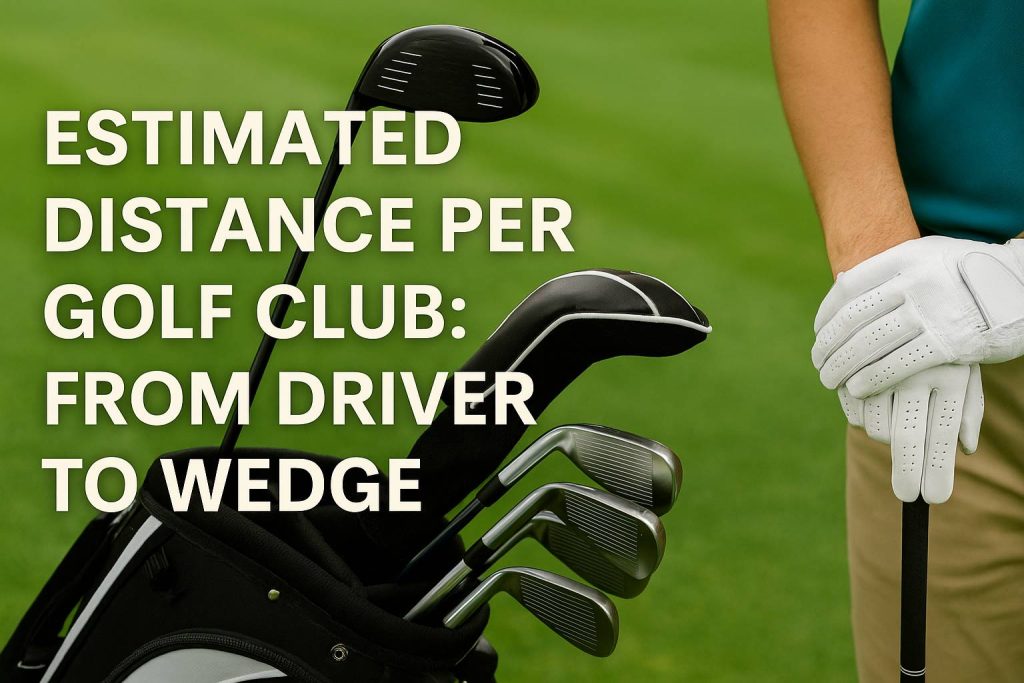
Average Distance per Golf Club (Amateur Male Golfers)
| Club Type | Loft (±) | Average Distance (meters) |
|---|---|---|
| Driver (1-wood) | 9–12° | 190 – 230 m |
| 3-wood | 15° | 175 – 210 m |
| 5-wood | 18° | 160 – 190 m |
| 3-hybrid | 19° | 160 – 185 m |
| 4-hybrid | 22° | 150 – 175 m |
| 3-iron | 20° | 165 – 185 m |
| 4-iron | 23° | 155 – 175 m |
| 5-iron | 26° | 145 – 165 m |
| 6-iron | 30° | 135 – 155 m |
| 7-iron | 34° | 125 – 145 m |
| 8-iron | 38° | 115 – 135 m |
| 9-iron | 42° | 100 – 125 m |
| Pitching Wedge | 46° | 80 – 110 m |
| Sand Wedge | 54–56° | 60 – 90 m |
| Lob Wedge | 58–60° | 40 – 70 m |
Average Distance per Golf Club (Amateur Female Golfers)
| Club Type | Average Distance (meters) |
|---|---|
| Driver | 140 – 180 m |
| 3-wood | 125 – 160 m |
| 5-wood | 110 – 145 m |
| 5-iron | 100 – 130 m |
| 7-iron | 85 – 115 m |
| 9-iron | 70 – 100 m |
| Pitching Wedge | 55 – 85 m |
| Sand Wedge | 40 – 65 m |
Make golf booking easier with the GoGolf app


Comparison with Professional Golfers
| Club Type | Pro Men (meters) | Pro Women (meters) |
|---|---|---|
| Driver | 260 – 300 m | 210 – 240 m |
| 7-iron | 145 – 165 m | 110 – 135 m |
| Pitching Wedge | 100 – 120 m | 80 – 95 m |
Full Chart: Average Distance per Golf Club for Amateur Male Golfers
| Club Type | Loft (±) | Average Distance (meters) |
|---|---|---|
| Driver (1-wood) | 9–12° | 190 – 230 m |
| 3-wood | 15° | 175 – 210 m |
| 5-wood | 18° | 160 – 190 m |
| 3-hybrid | 19° | 160 – 185 m |
| 4-hybrid | 22° | 150 – 175 m |
| 3-iron | 20° | 165 – 185 m |
| 4-iron | 23° | 155 – 175 m |
| 5-iron | 26° | 145 – 165 m |
| 6-iron | 30° | 135 – 155 m |
| 7-iron | 34° | 125 – 145 m |
| 8-iron | 38° | 115 – 135 m |
| 9-iron | 42° | 100 – 125 m |
| Pitching Wedge | 46° | 80 – 110 m |
| Sand Wedge | 54–56° | 60 – 90 m |
| Lob Wedge | 58–60° | 40 – 70 m |
Quick Notes
- Distance range varies based on swing strength, technique, ball type, and course conditions.
- Amateur women typically hit about 20–30% shorter than men.
- Professional golfers hit significantly longer. For example, PGA Tour pros often average:
- Driver: 290–310 m
- 7-iron: 150–165 m
Tips for Using This Distance Data
1. Use it as a reference, not a rule.
Your actual distance will depend on your personal swing mechanics and consistency.
2. Distance control and consistency matter more than raw power.
For instance, being able to hit a 7-iron consistently 130 m ± 5 m is more valuable than hitting it 145 m once and 115 m the next.
3. Test your own distances at a driving range.
Bring your clubs and record the average distance per club after 10–15 shots.
By understanding how far you hit each club, you can make smarter decisions on the course, avoid hazards, and improve your scoring potential. Whether you’re just getting started or looking to fine-tune your game, this data will help shape your club selection and course strategy.
FAQ About Golf Club Distance
1. What is the average distance of a driver in golf?
The driver is designed to produce the longest shots in golf. Amateur male golfers typically hit a driver around 190–230 meters, while professional players can exceed 250 meters depending on swing speed and technique.
2. How far does each golf club hit the ball?
Each golf club has a different average distance due to loft and design. Typical distances include:
- Driver: 190–230 m
- 5-iron: 145–165 m
- 7-iron: 125–145 m
- 9-iron: 100–125 m
- Pitching wedge: 80–110 m
3. Why do different golf clubs have different distances?
Distance differences come from loft angle, shaft length, and clubhead design. Drivers have low loft and longer shafts for maximum distance, while wedges have higher loft for shorter and higher shots.
4. What is the purpose of a driver in golf?
A driver is used for the first tee shot, especially on par-4 and par-5 holes, to send the ball as far as possible down the fairway.
5. How far do irons typically hit?
Irons are designed for approach shots toward the green. Average distances include:
- 5-iron: about 145–165 meters
- 7-iron: about 125–145 meters
- 9-iron: about 100–125 meters
6. What are the differences between woods, irons, and wedges?
Golf clubs are generally grouped into three categories:
- Woods – long-distance shots
- Irons – mid-range approach shots
- Wedges – short shots and bunker play
7. How far does a pitching wedge or sand wedge go?
Wedges are used for short approach shots near the green.
- Pitching wedge: around 80–110 meters
- Sand wedge: around 60–90 meters
8. Do all golfers hit the same distances with each club?
No. Distances vary depending on swing speed, skill level, physical strength, and quality of contact with the ball.
9. How can golfers measure their club distances?
Golfers can measure distances by:
- Practicing at a driving range
- Using a golf GPS or rangefinder
- Tracking their average distances during rounds.
10. Why is it important to know your golf club distances?
Knowing your club distances helps golfers choose the correct club for each shot, improving accuracy and course management.
11. Do professional golfers hit the ball farther?
Yes. Professional golfers usually generate higher swing speeds and more consistent ball striking, resulting in longer average distances compared to amateur golf players.
12. What factors affect golf shot distance?
Key factors include:
- Swing speed
- Club loft
- Weather conditions
- Ball type
- Player technique and consistency.