- Lifespan
- December 29, 1849 – May 1902
- Birthplace
- Musselburgh, Scotland
- Playing record
- Best finish of sixth in the Open Championship (1868) / four top-10 finishes
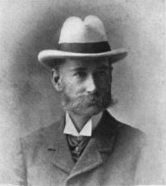
Tom Dunn was a professional golfer and golf course architect, born on December 29, 1849 at Musselburgh in Scotland. His father Willie Dunn Sr. was a golfer as well, and Tom learned clubmaking and the care of a course from him. He took his first professional post at North Berwick in 1869, and from 1870 he was professional to London Scottish Golf Club on Wimbledon Common in south-west London. He played in eight Open Championships between 1868 and 1886, his best finish being sixth in 1868, and he was inside the top ten four times. At North Berwick he taught the game to Arthur Balfour, later Prime Minister of Britain.
His work as an architect is taken to have begun in 1871, when he extended the London Scottish Golf Club course to 18 holes; the club describes that course as the oldest 18-hole course in England. In 1889 he became greenkeeper and clubmaker at Tooting Bec Golf Club in London and built the course at Furzedown, and from then on, as the game grew in popularity, he was asked to lay out courses up and down the country. The first nine holes at Sheringham Golf Club (founded 1891), Richmond Golf Club (1891) and Royal Worlington and Newmarket Golf Club (founded 1893) are all described by the clubs’ own sites as his work. At Royal Worlington he drew 18 holes, but only nine of them were built, and the course remains a nine-hole course to this day. From the middle of the 1890s he was professional at Meyrick Park in Bournemouth, leaving the clubmaking to his eldest son John so that he could give himself to design.
Dunn’s courses are known for the bunker or ditch set across the fairway short of the green, to be carried from the tee. His name is not as familiar as that of his contemporary Old Tom Morris, but he is counted among the architects who took course building inland, away from the seaside links and onto the heathland, around London in particular. In 1899 he crossed to America and supervised the golf course of a hotel in Florida. He returned to England in 1901, built the course at Hanger Hill in London and served there as professional and greenkeeper, but in May 1902 he died of tuberculosis at a sanatorium in Blagdon, Somerset. His eldest son John Duncan Dunn also worked as an architect in America, and built the course at Ekwanok Country Club in Vermont together with Walter Travis.
See the other golf course architects here.
GoGolfアプリで予約をもっと簡単に